Last October I tried to impress my Halloween-obsessed nephew with cute stuffed peppers that looked like tiny jack-o’-lanterns. The kitchen ended up looking like a crime scene: orange guts everywhere, peppers that collapsed like deflated balloons, and a filling that tasted like bland cardboard. My nephew took one bite, gave me the polite smile kids reserve for disappointing raisins on Halloween, and asked if we could just order pizza. I spent the next three weeks in recipe-testing exile, determined to create vegan jack-o’-lantern peppers that would make even the pickiest goblin beg for seconds. After twelve attempts, three minor burns, and one very smoky kitchen, I finally cracked the code.
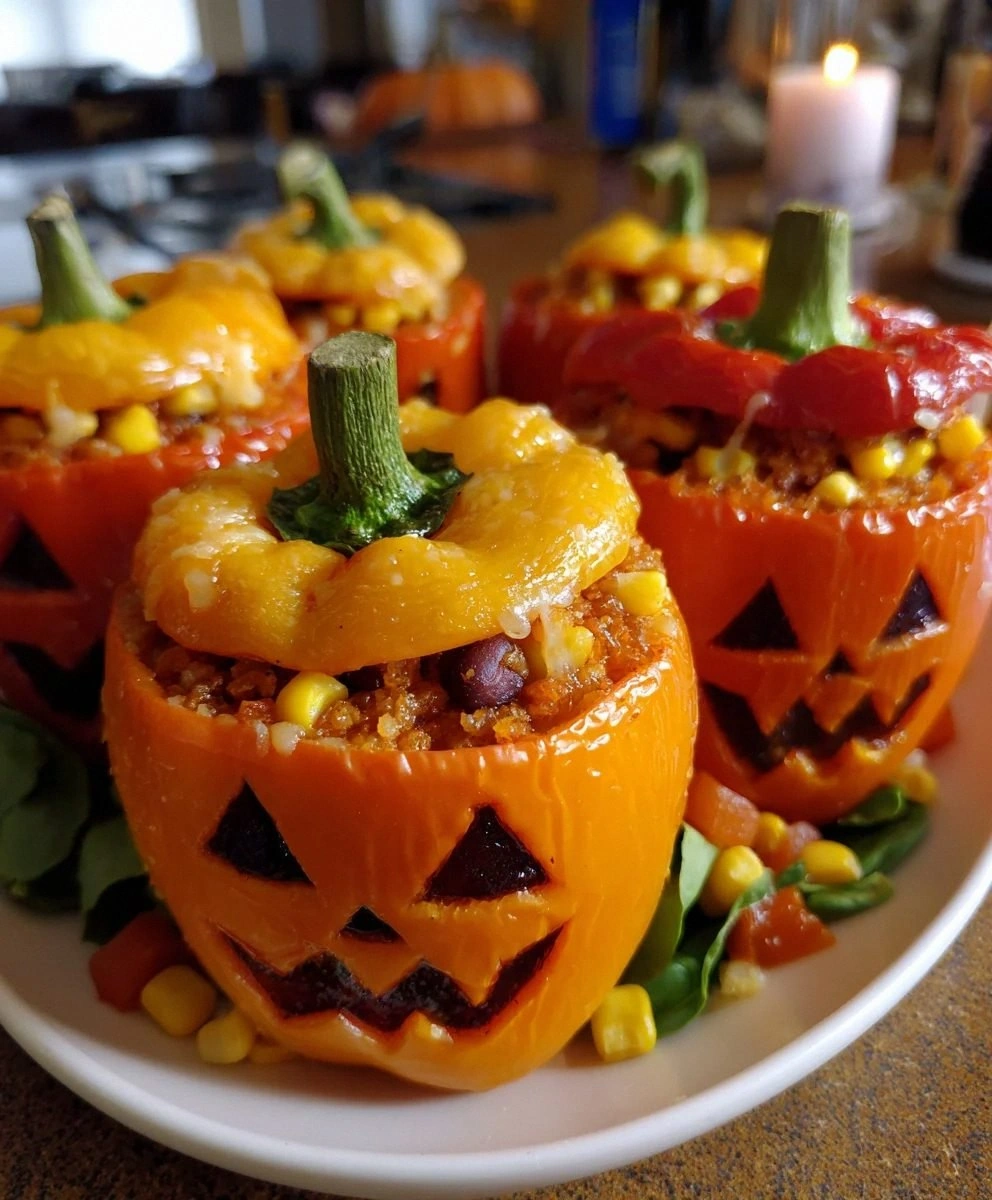
Picture this: glossy orange bell peppers standing upright like miniature pumpkins, their faces carved into cheeky grins that glow golden when they hit the oven. Inside, a riot of colors and textures—fluffy quinoa tangled with black beans that burst like tiny caviar, corn that pops with sunny sweetness, spinach that wilts into silky ribbons, all bound together by a smoky, cumin-laced tomato sauce that smells like October in a bowl. The edges of the pepper blister and char just enough to taste like campfire, while the filling steams into a cohesive, almost risotto-like comfort. If you've ever struggled with watery stuffed peppers that taste more like punishment than party food, you're not alone—and I've got the fix.
What makes this version different? Instead of raw peppers stuffed and baked into mush, we par-roast them so they keep their jack-o’-lantern shape and develop that deep, roasted sweetness. The filling gets a quick sauté that caramelizes the tomato paste and blooms the spices, so every bite tastes layered and intentional. A final shower of melty vegan cheese (optional but highly recommended) bubbles into a bronzed lid that seals in the moisture. Let me walk you through every single step—by the end, you'll wonder how you ever made it any other way.
What Makes This Version Stand Out
Shape-Shift: Most recipes tell you to lop off the top and stuff a pepper cup. Cute, but those cups topple over and the faces sag. We keep the stem intact and carve the face on the side so the pepper stands tall and the grin stays spooky.
Pre-Roast Magic: Ten minutes in a blazing-hot oven transforms raw, grassy peppers into silky, sweet shells that taste like candy corn for grown-ups. Skip this and you're basically eating a watery salad inside a bell-pepper water balloon.
Umami Bomb: Tomato paste gets fried in olive oil until it turns a shade darker than rust. That caramelized paste adds a depth most vegan fillings only dream of, tasting almost like chorizo without the meat.
Texture Playground: Quinoa for fluff, black beans for creaminess, corn for pop, spinach for silk, diced tomato for juicy pockets. Every forkful is a different conversation, yet they all finish each other's sentences.
One-Pan Zen: The filling cooks in the same skillet you use to sauté onions, so the browned bits on the bottom dissolve into the mix like free flavor tokens. Fewer dishes, more Netflix time.
Make-Ahead Hero: Stuff the peppers up to 24 hours ahead, park them in the fridge, then bake fresh when guests arrive. They travel like champs to potlucks—just carry them upright in a muffin tin.
Inside the Ingredient List
The Flavor Base
Olive oil carries fat-soluble spices straight into the quinoa crevices, so every grain tastes like it vacationed in Oaxaca. Yellow onion melts into jammy sweetness, buffering the sharper garlic and giving the filling a background hum rather than a raw shout. If you only have white onion, swap away, but yellow brings a rounder, almost buttery note that plays nicely with smoked paprika.
Garlic goes in after the onion is translucent so it hits hot fat and perfumes the kitchen in under thirty seconds. That sizzle when it hits the pan? Absolute perfection. Skip fresh garlic and the whole filling tastes like it forgot to wake up.
The Texture Crew
Cooked quinoa fluffs like couscous but packs complete protein, so these peppers can headline dinner without a sidekick. Day-old quinoa is best—its grains have dried slightly and won't glue together. If you're a rice devotee, brown rice gives you that nostalgic chew, but add an extra splash of water so the grains don't feel like they're auditioning for a gravel commercial.
Black beans must be rinsed until the water runs clear; otherwise, the starchy liquid turns the filling murky and mutes the spices. Pinch a few beans between your fingers—they should squish, not crunch. Canned beans are already cooked, so fold them in at the end to keep their skins intact.
Corn kernels bring candy-like bursts that contrast the earthy base. Frozen corn is flash-sweetened at harvest, so it's often sweeter than "fresh" corn that rode a truck for days. Thaw under running water for thirty seconds and you're golden.
The Unexpected Star
Baby spinach wilts in seconds and disappears into the mix, tricking even green-phobic kids into eating iron without a treaty negotiation. Chop it roughly so some ribbons stay visible; otherwise the color turns army-drab. No spinach? Kale works, but massage it first like you're kneading bread dough to soften the cellulose.
Tomato paste is the secret weapon. Most recipes treat it like an afterthought, but here it gets fried until it turns brick-red and smells like sun-dried tomatoes having a barbecue. Undercook it and your filling tastes metallic; push it past mahogany and it bitters like burnt toast.
The Final Flourish
Smoked paprika delivers campfire vibes without liquid smoke's fake-bacon aftertaste. Cumin adds dusty warmth like a wool sweater, while chili powder brings gentle heat that blooms at the back of your throat. Salt early to draw moisture from the onions, then adjust at the end after the quinoa drinks everything up.
Vegan shredded cheese is optional but transforms the dish from "healthy Tuesday" to "melty party." Pick a brand that lists coconut oil rather than tapioca starch as the first ingredient; it melts into stretchy strands instead of cement.
The Method — Step by Step
- Preheat your oven to 425 F (220 C). While it's heating, slice the tops off four large orange bell peppers and reserve the lids if you want mini hats. Carefully carve jack-o'-lantern faces on one side of each pepper using a small paring knife or, better yet, a grapefruit spoon. Go classic triangle eyes and a toothy grin, or get wild with crescent moons and vampire fangs—just don't cut all the way through the flesh or the filling will leak like a sad piñata. Rub the outsides with a whisper of olive oil and stand them upright on a parchment-lined sheet pan. Roast for ten minutes; you want the edges to blister like sun-kissed shoulders at a football game. This par-roast sets the shape and concentrates the sweetness, so don't skip it even if you're starving.
- While the peppers roast, heat two tablespoons of olive oil in a heavy skillet over medium heat. Add one finely diced yellow onion and cook until the pieces turn translucent and the edges start to color like autumn leaves, about six minutes. Stir occasionally so nothing sticks; if the onion browns too fast, lower the heat and add a splash of water to deglaze the pan. The aroma should smell like French onion soup's younger, hipper cousin.
- Stir in three minced garlic cloves and cook for thirty seconds—yes, set a timer. Garlic burns faster than gossip spreads, and burnt garlic turns the whole dish acrid. When the scent punches the air and your neighbor's dog starts barking, you're there. Immediately scoot the onion mix to the edges of the pan to make a red oasis in the center.
- Drop two heaping tablespoons of tomato paste into the cleared space and let it sizzle undisturbed for a full minute. This is the moment of truth. The paste will darken from bright ketchup to brick-red to almost chocolate. When tiny beads of oil separate and glisten like rubies, stir everything together so the paste coats the aromatics like edible velvet. Your kitchen should smell like you're simmering Bolognese on a snow day.
- Sprinkle in one teaspoon each of smoked paprika and ground cumin plus half a teaspoon of chili powder. Stir for another thirty seconds so the spices bloom—yes, you can actually see the oils turn a deeper shade. Season early and the salt draws moisture, turning your skillet into a fragrant slurry that smells like a Tex-Mex campfire.
- Add one cup of cooked quinoa (or brown rice) and one cup of canned black beans that have been rinsed until the water runs clear. Fold gently; you want the grains coated in that brick-red oil without smashing the beans into gray hummus. Let the mixture toast for two minutes so the quinoa sucks up the spiced oil like flavor-hungry sponges.
- Toss in one cup of corn kernels and two packed cups of chopped baby spinach. The spinach will wilt faster than a teenager's enthusiasm for family game night, so keep stirring until it collapses into vivid ribbons. Fold in one diced medium tomato plus the tomato paste scrapings from the can; the fresh tomato juices loosen everything so the filling stays moist, not soupy.
- Taste aggressively—burned tongue be damned. Add salt and black pepper until the mixture sings like a mariachi band. Remember the peppers will mute seasoning, so go a touch bolder than you think you should. If it tastes flat, add a squeeze of lime; if it's too spicy, a pinch of brown sugar tames the heat without turning dinner into dessert.
- Reduce the heat to low and cover the skillet while you retrieve the peppers. They should be fragrant, their skins slightly puckered like sun-dried tomatoes, but still holding their jack-o'-lantern grins. Carefully spoon the hot filling into each pepper cavity, mounding it like proud volcanoes. Pack gently; overstuffing causes cracks, but under-stuffing looks anemic.
- If using vegan cheese, shower two tablespoons on top of each pepper. Return the sheet pan to the oven for fifteen minutes, until the cheese melts into bronzed lava flows and the pepper edges char into smoky lace. Let them rest five minutes—yes, it's torture, but resting sets the filling so you can lift a pepper without it collapsing like a paper lantern in the rain.
Insider Tricks for Flawless Results
The Temperature Rule Nobody Follows
Most recipes say 375 F. Respectfully, they are wrong. A hotter oven (425 F) blisters the pepper skin quickly, sealing in moisture so the walls stay sturdy instead of slumping into sad sacks. The high heat also caramelizes the tomato paste in the filling, giving you those tiny pockets of concentrated umami that taste like you slow-cooked for hours. A friend tried skipping this step once—let's just say her peppers looked like deflated jack-o'-lantern balloons the day after Halloween.
Why Your Nose Knows Best
Don't trust timers alone; your nose is the most accurate kitchen timer money can't buy. When the filling is perfectly sautéed, your kitchen will smell like a campfire taco truck. If you catch a whiff of raw tomato or plain quinoa, keep going. When the scent shifts from bright and vegetal to rich and smoky, you're golden.
The 5-Minute Rest That Changes Everything
I know the peppers look like edible lava lamps when they emerge, but resting them on the sheet pan for five minutes allows the starches in the quinoa to set, so the filling slices like a dream instead of oozing like toddler finger paint. Cover loosely with foil so the cheese stays gooey but the peppers cool just enough to carve without third-degree tongue burns.
Creative Twists and Variations
This recipe is a playground. Here are some of my favorite ways to switch things up:
Mini Monster Bites
Use miniature sweet peppers and serve them as finger food. Halve them lengthwise, carve tiny fangs, and reduce the first roast to six minutes. They disappear faster than candy corn at an office party.
Buffalo Ghost Peppers
Swap the smoked paprika for one teaspoon of buffalo seasoning and fold in diced celery. Drizzle with ranch-flavored vegan aioli for a game-day twist that tastes like wings without the bones.
Breakfast Jack-o'-Lanterns
Replace quinoa with hash-brown shreds, black beans with crumbled tofu, and add a pinch of turmeric for eggy color. Top with vegan cheddar and serve with hot sauce for spooky brunch.
Moroccan Magic
Sub cumin and paprika with ras el hanout, add chopped dried apricots and toasted almonds, and finish with a squeeze of lemon. The sweet-savory combo tastes like a Marrakech night market.
Enchilada Stuffers
Stir in two tablespoons of enchilada sauce and a handful of chopped olives. Serve over a puddle of warm salsa and garnish with cilantro for south-of-the-border vibes.
Thanksgiving Harvest
Fold in roasted cubes of butternut squash and swap corn for dried cranberries. A sprinkle of toasted pecans on top gives you autumn in every bite.
Storing and Bringing It Back to Life
Fridge Storage
Let the peppers cool completely, then park them in an airtight container with a paper towel on top to absorb excess steam. They'll keep for up to four days, though the faces may wrinkle like wise old pumpkins. Reheat in a 350 F oven for twelve minutes, adding a splash of water to the pan to create steam that perks the skins back up.
Freezer Friendly
Wrap each cooled pepper in parchment, then foil, and freeze for up to two months. Thaw overnight in the fridge, then reheat as above. The texture softens slightly, but the flavor deepens like leftover chili—some say they're even better.
Best Reheating Method
Microwaves murder texture, so avoid them unless you enjoy rubbery pepper jackets. Instead, place peppers in a baking dish, add a tablespoon of water, cover with foil, and bake at 350 F until heated through—about fifteen minutes. Remove the foil for the final three minutes to re-crisp any cheese.