Love this? Pin it for later! 📌
Why This Recipe Works
- Quick Yeast Shortcut: A brief 20-minute rest gives bakery-level puff without an all-day rise.
- Buttermilk Tenderizer: The gentle acid relaxes gluten, yielding melt-in-the-mouth interiors.
- Small-Batch Frying: A modest 1½-inch depth of oil keeps the process safe yet speedy.
- Double Sugar Roll: One coat while warm for adherence, a second for picture-perfect sparkle.
- Freezer Friendly: Flash-fry, cool, freeze, then refresh in a 350°F oven for six minutes.
- Kid-Approved Shapes: Rolling dough into balls doubles as a tactile craft for little helpers.
- Infusion Ready: Drop a spent vanilla pod into the sugar jar for next-level aromatic coating.
Ingredients You'll Need
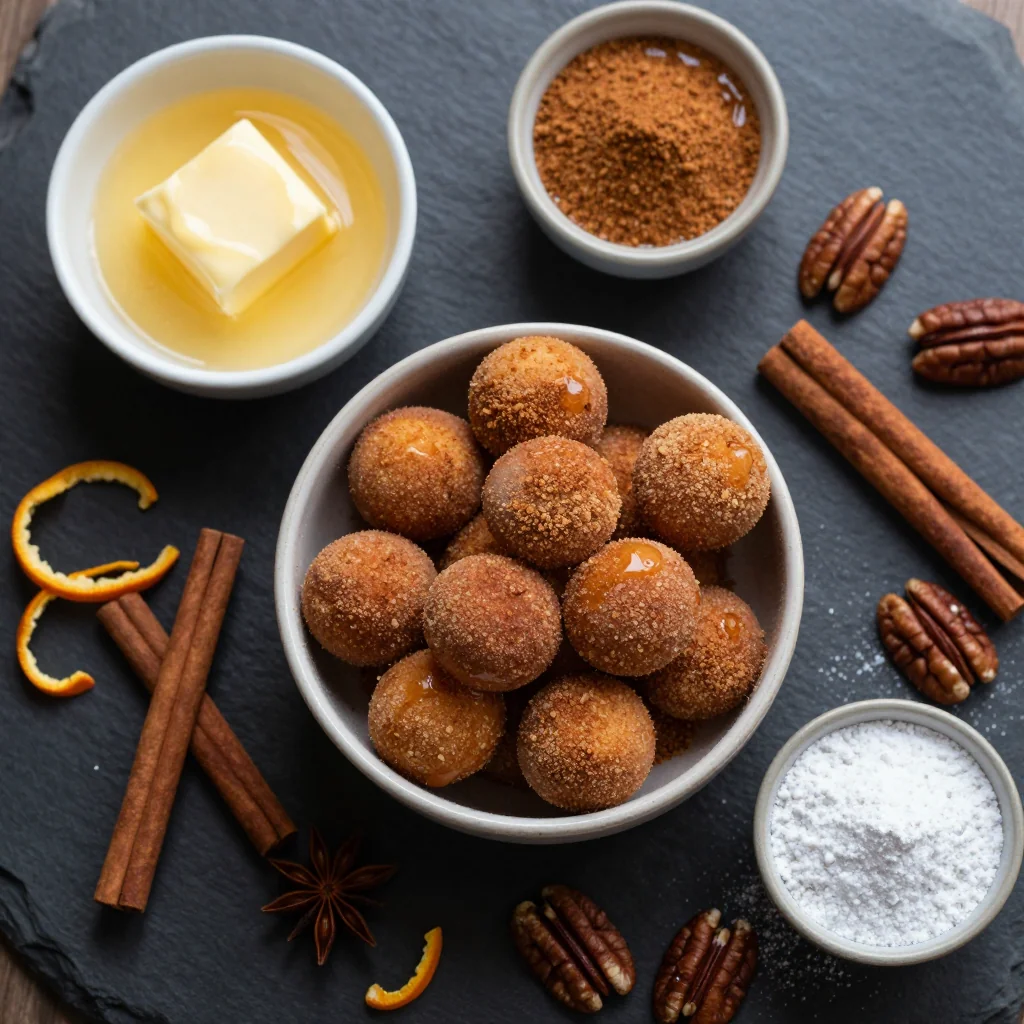
Great donut holes start with everyday staples treated with a little intention. Below, I unpack each player and share the tiny details that separate “good” from “can’t-stop-eating.”
All-Purpose Flour: Stick with a moderate-protein brand (10–11%). Too much protein creates chew rather than the cotton-soft interior we’re chasing. If you only have bread flour, swap in one tablespoon of cornstarch per cup to soften the gluten network.
Granulated Sugar (Dough): Sugar is not just sweetness; it’s food for the yeast and helps browning. Because the dough proofs briefly, we keep the quantity conservative—any more and the holes can over-caramelize in the fryer.
Instant Yeast: Also labeled “rapid-rise” or “bread machine” yeast. It dissolves directly into the dry mix, shaving minutes off prep. Check the expiration date; stale yeast is the silent culprit behind dense donuts.
Ground Nutmeg: A whisper of nutmeg whispers “old-fashioned bakery.” Freshly grated is lovely but pre-ground works as long as it’s fragrant when you open the jar. Replace every January; spices age faster than we think.
Salt: Fine sea salt distributes evenly. Don’t be tempted to skip it; salt balances sweetness and tightens gluten for structure.
Buttermilk: True cultured buttermilk gives tang and tenderness. No buttermilk? Stir 1 tablespoon white vinegar into ¾ cup whole milk and let stand 5 minutes. The mixture thickens and acidulates, mimicking the real thing.
Unsalted Butter: Melted and cooled so it won’t scramble the egg. Butter enriches the crumb; margarine or oil leave a greasy after-coat.
Egg: One large egg at room temperature blends seamlessly and aids browning thanks to its protein and natural lecithin. Forgot to pull it from the fridge? Submerge in warm tap water for 5 minutes.
Vanilla Extract: Opt for pure, not imitation. The volatile compounds survive frying and perfume the sugar coating.
Neutral Oil for Frying: Refined canola, peanut, or sunflower oil all have high smoke points and neutral flavor. Save pricey olive oil for vinaigrettes; its grassy notes compete with cinnamon.
Coating Sugar & Cinnamon: A 3:1 ratio of sugar to cinnamon gives punchy warmth without harsh spice. I mix Ceylon and Korintje cinnamon—Ceylon for floral sweetness, Korintje for heat. Use what you have; even grocery-store cinnamon transforms after a quick toast in a dry skillet for 60 seconds.
How to Make Warm Cinnamon Sugar Donut Holes for Cozy January Treats
Whisk the Dry Foundation
In the bowl of a stand mixer (or a large mixing bowl), whisk 2¼ cups (285 g) all-purpose flour, 2½ tablespoons granulated sugar, 1 packet (2¼ teaspoons) instant yeast, ¼ teaspoon ground nutmeg, and ½ teaspoon fine sea salt. Aerating the mixture now prevents pockets of leavening later.
Warm the Wet Team
In a separate microwave-safe jug, combine ¾ cup buttermilk, 3 tablespoons melted unsalted butter, and 1 large egg. Microwave on 50 % power for 20-second bursts until just lukewarm (about 100°F). Stir in 1 teaspoon vanilla. Overheating here kills yeast and scrambles egg, so think “baby-bottle warm,” not hot.
Make the Shaggy Dough
Pour wet ingredients into dry. Fit the mixer with the dough hook and knead on medium-low for 6 minutes until the mass pulls from the sides yet still sticks lightly to the bottom. If mixing by hand, use a sturdy spatula until a ragged clump forms, then turn onto a lightly floured counter and knead 8–9 minutes. The dough should feel tacky—almost like a Post-it note—not dry.
Brief Rise
Lightly oil the same bowl, gather the dough into a smooth ball, and turn once to coat. Cover with plastic wrap and park in a draft-free spot for 20 minutes. Because we’re using instant yeast and a higher ratio of leavening, a full doubling isn’t necessary; we only need the gluten to relax for easy shaping.
Portion Uniform Holes
Pat the dough into a ½-inch thick rectangle. Using a bench scraper, cut into 24 roughly equal squares (about 12 g each). Roll each square into a smooth ball by cupping your palm and making tiny circles on an unflamed counter; the tackiness of the dough against the dry surface creates tension and seals seams.
Heat Oil Safely
Pour 1½ inches neutral oil into a heavy-bottomed pot (Dutch ovens excel at heat retention). Clip on a candy thermometer and heat over medium until the temperature holds steady at 350°F. Maintaining this zone is critical: too low and the holes absorb oil; too high and the exterior burns before the interior cooks.
Fry in Small Batches
Gently lower 5–6 balls into the oil. They’ll sink, then bob to the surface within 30 seconds. Fry 90 seconds per side until deep golden, turning with a spider or slotted spoon. Transfer to a wire rack set over paper towels. Allow the oil to return to 350°F before the next batch; a 60-second pause usually suffices.
Double Sugar Roll
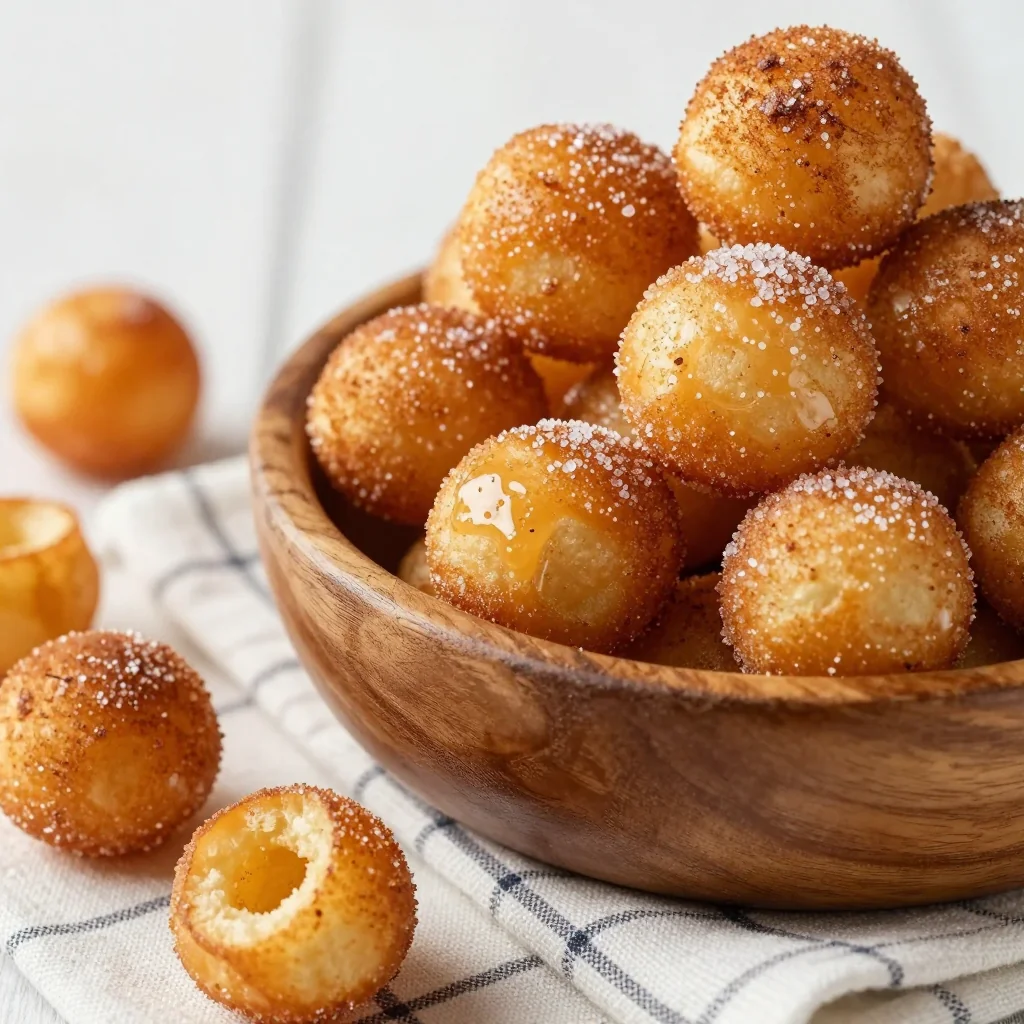
While the first batch fries, whisk ¾ cup granulated sugar with 2½ teaspoons ground cinnamon in a shallow bowl. The moment the holes are cool enough to handle (about 2 minutes), toss them in the mixture. Wait another 3 minutes, then roll again; the residual heat sets up a light syrup that grabs a second sugary coat and that signature crunch.
Serve Immediately
January calls for warmth, so plate them straight from the rack. If you must wait, park the finished holes on a parchment-lined sheet in a 200°F oven with the door ajar; the gentle heat keeps them supple without over-baking the sugar crust.
Expert Tips
Thermometer Trust
An inexpensive clip-on thermometer is the single best insurance against oily donuts. If the mercury dips, wait; if it climbs, reduce the burner.
Reuse Oil Smartly
Cool, strain through cheesecloth, and store in the freezer. Sweet doughs leave fewer impurities, so you can fry up to four batches before the oil degrades.
Avoid Crowding
Overcrowding drops oil temperature fast, leading to greasy centers. Fewer holes per batch equals lighter, crisper results.
Rest Re-rolls
Gather scraps, knead lightly, cover, and rest 10 minutes before re-rolling. Immediate re-rolling activates gluten and toughens the final holes.
Snow-Day Shortcut
Mix dough the night before, cover bowl with plastic directly on surface, and refrigerate. Next morning, let stand 30 minutes at room temp, then portion and fry—no extra yeast needed.
Color Code Doneness
Look for a chestnut-brown ring where the hole touched the oil. Pale sides signal more time; mahogany means you’ve crossed into bitter territory.
Variations to Try
- Orange-Cardamom: Swap nutmeg for ½ teaspoon freshly ground cardamom and add 1 teaspoon orange zest to the dough. Coat sugar with a pinch of cardamom for echoing notes.
- Maple-Glazed: Skip the cinnamon sugar and dip warm holes in 1 cup powdered sugar whisked with 3 tablespoons maple syrup and 1 tablespoon milk.
- Chocolate-Filled: Pat dough circles, place a ½-inch cube of bittersweet chocolate in the center, pinch to seal, roll smooth, then fry. Dust with cocoa-powdered sugar.
- Vegan Version: Replace buttermilk with oat milk curdled with lemon juice, butter with vegan margarine, egg with 1 tablespoon flaxseed meal soaked in 3 tablespoons water.
- Baked Not Fried: Pipe dough into mini-muffin tins coated with non-stick spray. Bake 10–12 minutes at 375°F, brush with melted butter, then roll in cinnamon sugar. The crust will be softer but still satisfying.
Storage Tips
Like most fried treats, these donut holes shine brightest within the first two hours. If you must store leftovers, cool completely, then place in an airtight container lined with a paper towel to absorb condensation. Keep at room temperature up to 24 hours; refresh 4 minutes in a 350°F oven before serving. For longer storage, freeze sugared holes in a single layer on a sheet pan, then transfer to a zip-top bag with as much air removed as possible. They’ll keep one month. Reheat directly from frozen 6–7 minutes at 350°F, then reroll in fresh cinnamon sugar for renewed sparkle.
Make-ahead strategy: Mix, portion, and freeze the raw dough balls on a parchment-lined tray. Once solid, store in a bag. When guests arrive, thaw 15 minutes at room temp while the oil heats, then fry as directed. The short thaw prevents blow-outs and keeps the centers fluffy.
Frequently Asked Questions
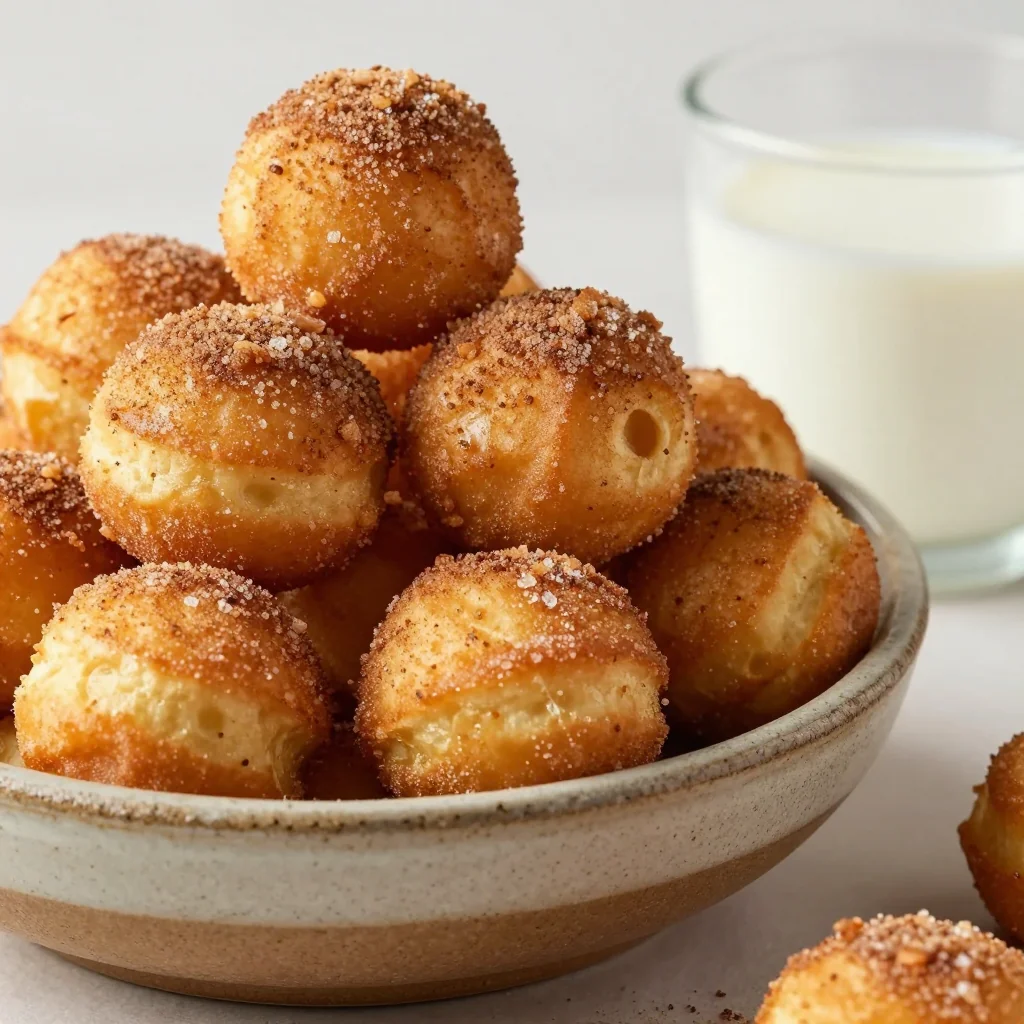
Warm Cinnamon Sugar Donut Holes for Cozy January Treats
Ingredients
Instructions
- Mix Dry: Whisk flour, sugar, yeast, nutmeg, and salt in a stand-mixer bowl.
- Combine Wet: Warm buttermilk, butter, and egg to 100°F; stir in vanilla.
- Make Dough: Add wet to dry; knead with dough hook 6 minutes until tacky.
- Quick Rise: Cover and rest 20 minutes.
- Portion: Divide into 24 pieces; roll into smooth balls.
- Fry: Heat oil to 350°F; fry 5–6 holes at a time, 90 seconds per side.
- Coat: Roll warm holes twice in cinnamon sugar.
- Serve: Enjoy immediately for peak fluff.
Recipe Notes
Oil temperature is key—keep a thermometer clipped to the pot and adjust heat as needed for a crisp, non-greedy crust.