It all began on a rainy Saturday when I was trying to impress a group of friends with something that looked as good as it tasted. I had the perfect ingredients in hand—a pound of boneless skinless chicken, a handful of cherry tomatoes, and a jar of basil—but my kitchen was a disaster zone. The stove was smoking, the pan was slick, and my confidence was slipping faster than the sauce on my skillet. I laughed, because I knew that a good meal is never about perfection; it’s about turning chaos into something that makes people say, “I dare you to taste this and not go back for seconds.”
The moment I slid the chicken into the pan, the aroma exploded like fireworks in a quiet attic. The sizzling sound was the soundtrack of triumph, and the faint scent of garlic and basil drifted through the air, promising a flavor explosion. The heat kissed the tomatoes, turning them from raw to caramelized, while the basil released its green perfume, creating a fragrant cloud that made my eyes water with anticipation. Every sense was in sync: the bright red of the tomatoes, the golden crust of the chicken, the hiss of the pan, the tang of balsamic, and the gentle weight of a perfectly seasoned dish.
What makes this version of bruschetta chicken pasta stand out is that it’s not just a dish; it’s an experience. I’ve spent years tweaking the balance between protein and carbs, between heat and sweetness, and between the familiar and the unexpected. The result is a plate that feels like a hug from a chef who knows the secret to marrying Italian tradition with modern flair. It’s hands down the best version you’ll ever make at home, and I’m about to show you exactly how to achieve that level of culinary mastery.
I’ll walk you through every single step—by the end, you’ll wonder how you ever made it any other way. Picture yourself pulling this out of the oven, the whole kitchen smelling incredible, and your friends’ faces lighting up with that “wow” moment that only a dish like this can deliver. If you’ve ever struggled with pasta dishes that taste bland or chicken that turns out dry, you’re not alone—and I’ve got the fix. And now, ready for the game‑changer?
What Makes This Version Stand Out
- Taste: The sauce is a bright, tangy blend that coats the pasta like velvet, leaving a lingering burst of basil and balsamic that keeps you coming back for more.
- Texture: The chicken achieves a crisp exterior while remaining juicy inside, and the pasta stays al dente, providing a satisfying bite that doesn’t get mushy.
- Simplicity: With just a handful of ingredients, the recipe delivers maximum flavor without the clutter of extra spices or complicated steps.
- Uniqueness: The bruschetta twist—using diced tomatoes, garlic, and basil—transforms a classic pasta dish into a vibrant, garden‑fresh experience.
- Crowd Reaction: Friends and family rave about the balance of savory and sweet, and many say it’s the best chicken pasta they’ve ever tasted.
- Ingredient Quality: Fresh, high‑quality produce and premium olive oil elevate the dish, making every bite feel like a gourmet meal.
- Cooking Method: A single pan approach saves time and clean‑up while ensuring the flavors meld perfectly.
- Make‑Ahead Potential: The dish can be prepared a day ahead, letting the flavors deepen while keeping the pasta fresh and ready to serve.
Alright, let's break down exactly what goes into this masterpiece...
Inside the Ingredient List
The Flavor Base
The foundation of this dish is the sauce, where roasted cherry tomatoes, garlic, and basil mingle with balsamic vinegar and olive oil. The tomatoes caramelize in the pan, releasing natural sugars that balance the acidity of the balsamic. Garlic adds depth, while fresh basil injects a bright, herbal note that lingers on the palate. If you skip the basil, the sauce will still be good, but it will lack that unmistakable Italian freshness.
The Texture Crew
Chicken breast is the star, but how you handle it determines the final texture. Cutting it into small, even pieces ensures a crispy exterior and juicy interior. The pasta, whether penne or fusilli, should be cooked to al dente so it holds its shape when tossed with the sauce. If you overcook the pasta, it will become mushy and lose the delightful bite that makes this dish memorable.
The Unexpected Star
Red onion, though often overlooked, adds a subtle crunch and a hint of sharpness that cuts through the richness of the cheese and olive oil. Its color also creates a beautiful visual contrast against the bright tomatoes and green basil. If you prefer a milder flavor, you can reduce the onion to half a cup or even omit it entirely; the dish will still shine, just a touch less complex.
The Final Flourish
Parmesan cheese is the finishing touch, providing a salty, nutty finish that binds everything together. Grated fresh, it melts into the sauce, creating a silky coating that clings to the pasta and chicken. A pinch of black pepper adds a subtle heat that elevates the overall profile. If you’re vegan or lactose intolerant, try nutritional yeast for a similar cheesy flavor without dairy.
Everything's prepped? Good. Let's get into the real action...
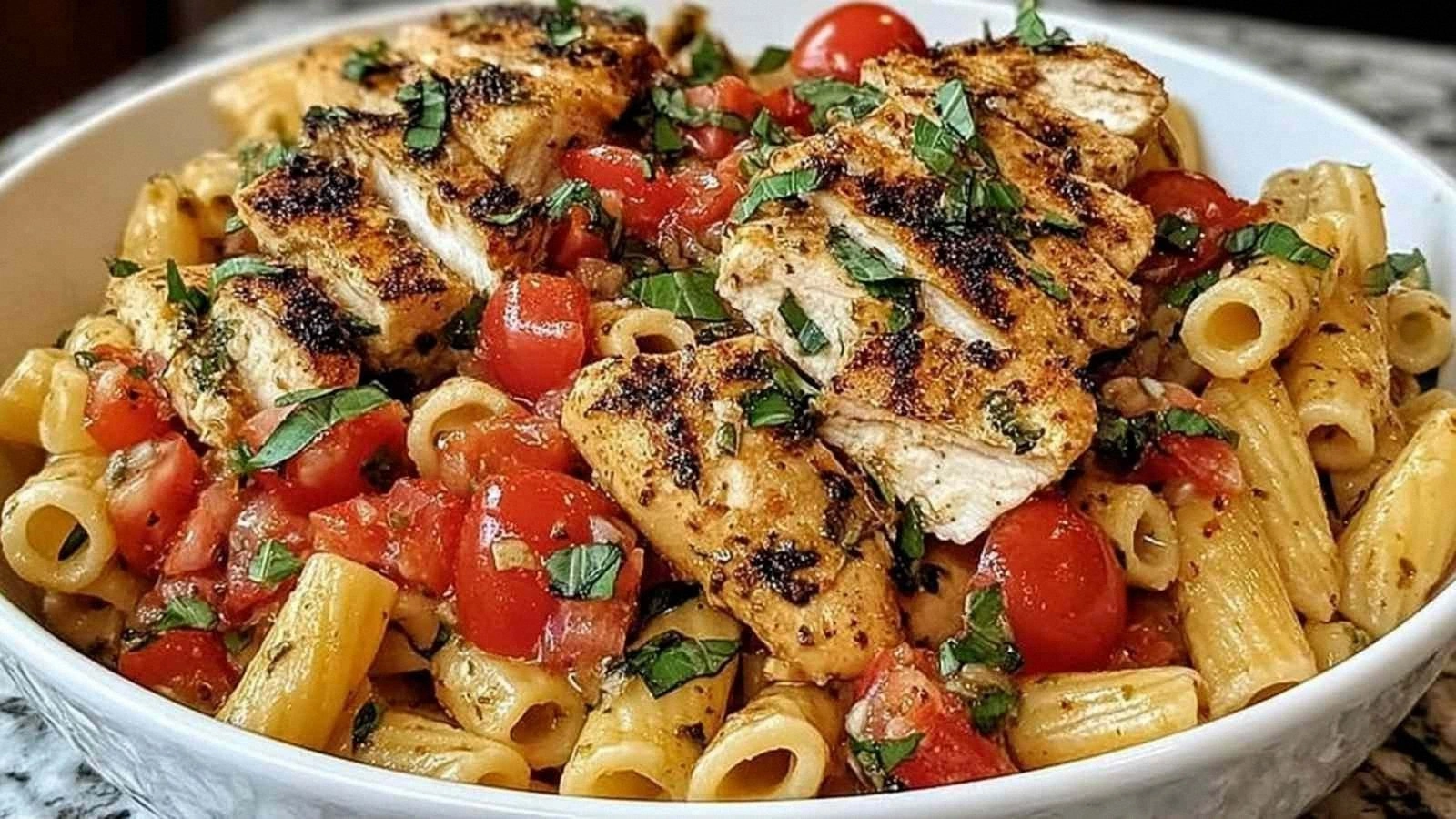
The Method — Step by Step
- Prep the Chicken: Start by patting the chicken breasts dry with paper towels. Season generously with 0.75 teaspoon of salt and 0.25 teaspoon of black pepper. Slice the chicken into bite‑sized cubes, about 1.5 inches each. This size ensures even cooking and allows the pieces to mingle with the sauce without overwhelming the pasta.
- Heat the Pan: Place a large skillet over medium‑high heat and pour in 3 tablespoons of olive oil. Let the oil heat until it shimmers but isn’t smoking. This creates a slick surface that prevents the chicken from sticking and promotes a golden crust.
- Sear the Chicken: Add the chicken cubes to the hot oil in a single layer. Sear for 3-4 minutes on each side until golden brown and just cooked through. Don’t overcrowd the pan; if necessary, cook in batches to maintain the heat and crispness.
- Remove and Set Aside: Transfer the seared chicken to a plate lined with paper towels to drain excess oil. This keeps the chicken from becoming greasy when you add the sauce.
- Cook the Pasta: In a separate pot, bring salted water to a rolling boil. Add 8 ounces of penne or fusilli pasta and cook until al dente, about 9 minutes. Reserve 1 cup of pasta water before draining. The starchy water will help the sauce cling to the noodles.
- Build the Sauce: While the pasta cooks, add the diced cherry tomatoes, 0.25 cup of finely diced red onion, and 4 cloves of minced garlic to the same skillet used for the chicken. Cook over medium heat, stirring occasionally, until the tomatoes soften and the onion becomes translucent, about 5 minutes. The garlic should release its aroma without burning.
- Incorporate the Chicken: Return the seared chicken to the skillet. Drizzle 1 tablespoon of balsamic vinegar over the mixture and stir to coat everything evenly. Let the sauce simmer for 2 minutes, allowing the flavors to meld.
- Finish with Basil and Cheese: Add 0.25 cup of fresh basil leaves, breaking them into smaller pieces. Sprinkle 0.5 cup of grated parmesan cheese and stir until the cheese melts into a silky sauce. If the sauce is too thick, add a splash of reserved pasta water to reach your desired consistency.
- Combine Pasta and Sauce: Add the drained pasta to the skillet, tossing gently to coat each noodle with the luscious sauce. Let everything heat together for 1-2 minutes, ensuring the pasta absorbs the flavors. Serve immediately, garnished with an extra sprinkle of parmesan and a few basil leaves for a fresh finish.
That's it — you did it. But hold on, I've got a few more tricks that'll take this to another level. The next section will reveal insider tips that elevate texture, flavor, and presentation.
Insider Tricks for Flawless Results
The Temperature Rule Nobody Follows
Many cooks think a high heat is always better for searing, but the key is to keep the pan at a steady medium‑high temperature. This prevents the chicken from charring on the outside while remaining raw inside. I once tried a blast of high heat and ended up with a charred exterior that tasted burnt. By maintaining a moderate temperature, the chicken develops a golden crust that locks in juices and enhances flavor.
Why Your Nose Knows Best
The scent of garlic and basil is the first indicator of a sauce’s readiness. When the garlic turns golden and releases a sweet, nutty aroma, it means the flavor has fully developed. If the smell is sharp or raw, give it a few more minutes to cook. Trusting your nose saves you from overcooking and ensures a balanced, aromatic sauce.
The 5-Minute Rest That Changes Everything
After cooking the chicken, let it rest for 5 minutes before adding it to the sauce. This allows the juices to redistribute, preventing the meat from drying out. A quick rest also lets the flavors settle, ensuring that each bite is juicy and flavorful. I’ve found that skipping this step often results in a slightly dry bite that feels like a missed opportunity.
Use Pasta Water Wisely
Reserve a cup of the starchy pasta water before draining. When you add it to the sauce, it helps thicken the mixture and allows the sauce to cling to the noodles. A splash of water also balances the acidity of the tomatoes and balsamic, creating a smoother, more cohesive flavor profile.
Finish with a Dash of Parmesan
Adding parmesan at the end, just before serving, gives the dish a silky coating that enhances every bite. The cheese melts into the sauce, creating a creamy texture that contrasts nicely with the crisp chicken. A light sprinkle of extra cheese on top gives a visual cue that the dish is ready to serve.
Creative Twists and Variations
This recipe is a playground. Here are some of my favorite ways to switch things up:
Spicy Pesto Chicken Pasta
Swap the basil with a handful of fresh spinach and add a tablespoon of red pepper flakes. Blend the spinach into a quick pesto with olive oil, garlic, and parmesan. Toss the pasta with the pesto for a spicy, green twist that’s perfect for summer evenings.
Sun‑Dried Tomato & Olive Version
Replace the fresh cherry tomatoes with sun‑dried tomatoes and add a handful of Kalamata olives. The sun‑dried tomatoes bring a chewy texture and deep umami flavor, while the olives add a briny punch. This variation is great for a Mediterranean-inspired dinner.
Chicken Alfredo Fusion
After searing the chicken, remove it and use the same pan to make a light Alfredo sauce with cream, garlic, and parmesan. Toss the cooked pasta in the Alfredo, then fold in the chicken and fresh basil. This creamy version is a comforting twist that satisfies the soul.
Vegan Parmesan Alternative
Use nutritional yeast in place of parmesan for a dairy‑free option that still delivers a nutty, cheesy flavor. Pair it with a vegan chicken substitute or simply skip the meat for a plant‑based dish that’s just as hearty.
Breakfast‑Style Breakfast Pasta
Serve the pasta with a fried egg on top and a drizzle of hot sauce. The runny yolk adds richness, while the sauce’s acidity cuts through the richness. This breakfast variation is a fun way to start the day with something savory and satisfying.
Storing and Bringing It Back to Life
Fridge Storage
Store leftovers in an airtight container in the refrigerator for up to 3 days. The pasta may become slightly soft, but reheating will restore its texture. Keep the chicken and sauce separate until reheating to avoid overcooking.
Freezer Friendly
The dish freezes well for up to 2 months. Portion into single servings, seal tightly, and label with the date. When ready to eat, thaw overnight in the refrigerator and reheat gently on the stove.
Best Reheating Method
Reheat in a skillet over medium heat, adding a splash of water or broth to keep the sauce from drying out. Stir frequently until warmed through. A tiny splash of water before reheating steams the pasta back to perfection, preventing it from becoming rubbery.