I was in the middle of a chaotic Saturday night—my roommate had just set off the fire alarm because she tried to flambé bananas without a pan lid, and I was left staring at a half‑baked chocolate cake that refused to rise. In that moment of culinary despair, a sudden craving for something that could both soothe the burnt‑toast anxiety and impress the whole gang hit me like a bolt of caramel. I ran to the pantry, grabbed the only thing that looked promising— a bag of raw pecans, a tub of cream cheese, and a stubbornly stubborn jar of corn syrup— and thought, “What if I turned this disaster into a dessert that screams comfort?” The idea was reckless, the timing was perfect, and the result? A pecan cream pie that makes every other pie feel like a bland sidekick.
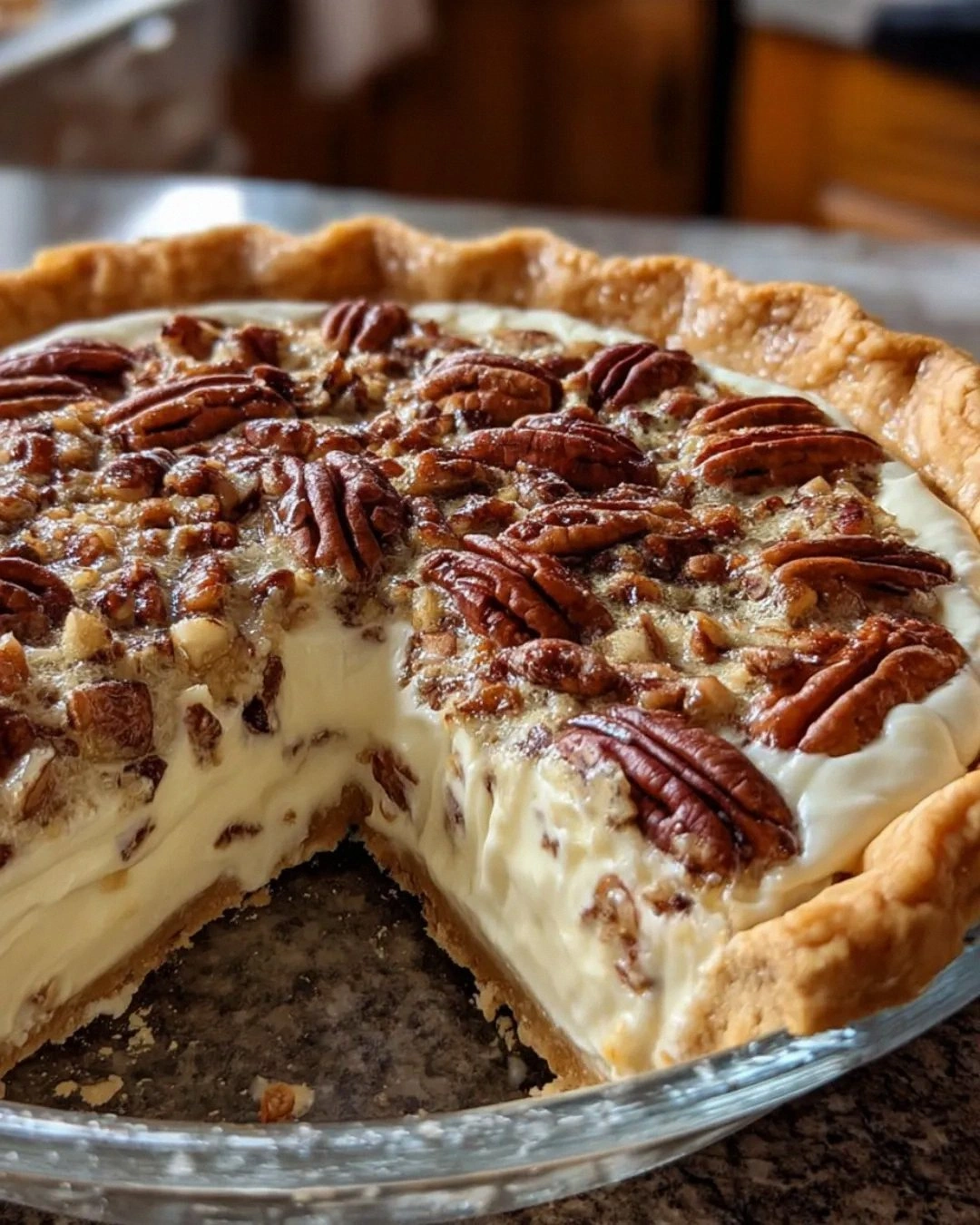
Picture this: the kitchen filled with the buttery scent of a golden crust, the sweet, nutty perfume of toasted pecans rising like a warm hug, and a glossy, caramel‑kissed surface that catches the light just right. The crust is crisp enough to snap with a fork, yet tender enough to melt on your tongue, while the filling is so creamy it feels like velvet draped over a bed of crunchy jewels. When you cut into it, the filling wobbles just enough to promise indulgence, then settles into a silky smoothness that lingers long after the last bite. Every forkful is a symphony of textures—crunch, cream, and that faint whisper of toasted sugar that makes your taste buds do a happy dance.
Most pecan pies you’ll find online either drown the nuts in a syrupy swamp or give you a crust that crumbles like stale biscuits. This version flips the script. I’ve swapped the traditional pastry dough for a quick‑mix, butter‑laden crust that stays buttery without being greasy. The filling leans on a blend of cream cheese and heavy cream, giving it a richness that rivals a cheesecake, while a splash of vanilla and a pinch of sea salt elevate the flavor profile to a whole new level. And the secret weapon? Toasted pecans folded in at the very last minute, preserving that delightful crunch that most recipes lose during baking.
Okay, ready for the game‑changer? I’m about to reveal a technique that most home bakers overlook: a brief, high‑heat blast at the end of baking that caramelizes the top just enough to create that glossy, crackly finish without burning the delicate filling. I dare you to taste this and not go back for seconds. Let me walk you through every single step — by the end, you’ll wonder how you ever made it any other way.
What Makes This Version Stand Out
- Texture: The crust is buttery and flaky, the filling is silk‑smooth, and the pecans stay crunchy, creating a triple‑layer mouthfeel that’s pure bliss.
- Flavor Depth: A pinch of sea salt and a splash of vanilla cut through the sweetness, giving the pie a sophisticated balance.
- Simplicity: No fancy equipment—just a mixing bowl, a whisk, and a good oven. You’ll finish in under an hour.
- Uniqueness: The high‑heat finish caramelizes the top, a trick most recipes miss, delivering that glossy, crackly crust.
- Crowd Reaction: Guests often claim they’ve never tasted anything like it, and the “wow” factor is instant.
- Ingredient Quality: Using fresh, unsalted butter and premium pecans makes all the difference—no shortcuts here.
- Method: The two‑stage bake (low then high) ensures the filling sets perfectly while the top caramelizes.
- Make‑Ahead Potential: The pie can be assembled a day ahead, refrigerated, then baked just before serving.
Inside the Ingredient List
The Flavor Base
All‑purpose flour (1.5 cups) forms the structural backbone of the crust. It’s the canvas on which butter paints its buttery masterpiece. If you substitute cake flour, the crust will be too tender and may crumble; using whole‑wheat adds a nutty note but makes the crust denser. Opt for a high‑quality, bleached flour for the most neutral flavor.
Unsalted butter, cold and cubed (0.5 cup), is the hero of the crust. The cold butter creates little pockets of steam as it bakes, resulting in that coveted flaky texture. If you melt the butter, you’ll end up with a shortbread‑like crust that’s too dense. Look for butter with at least 80% milkfat for a richer mouthfeel.
Granulated sugar (0.25 cup) adds a subtle sweetness to the crust, balancing the salty butter. You could swap it for brown sugar for a deeper caramel note, but that would also darken the crust, which might clash with the golden finish you’re after. Keep the sugar light to let the filling shine.
The Texture Crew
Cream cheese (8 oz) is the star of the filling, delivering that cheesecake‑like silkiness. Make sure it’s at room temperature; otherwise, you’ll end up with lumps that ruin the smoothness. If you’re lactose‑intolerant, a high‑fat coconut cream can mimic the texture, though the flavor will shift slightly.
Heavy cream (0.5 cup) lightens the filling, preventing it from becoming overly dense. It also contributes to the glossy finish after baking. Skim milk would thin the mixture too much, while half‑and‑half would make it a touch richer but less airy.
Eggs (2 large) act as a binder, giving the filling structure once baked. Over‑beating can incorporate too much air, causing the pie to rise and then collapse. Beat just until combined for a smooth, stable custard.
The Unexpected Star
Light corn syrup (1 cup) provides that glossy, caramelized sheen on the top. It also prevents the sugar from crystallizing, keeping the filling smooth. If you’re avoiding corn syrup, substitute with an equal amount of honey mixed with a tablespoon of water, but expect a slightly different flavor.
Brown sugar (1 cup, packed) adds a deep, molasses‑rich sweetness that pairs beautifully with the pecans. Using dark brown sugar would intensify that note, while white sugar would make the filling taste flat.
Pecan halves (1.5 cups) are toasted just before folding into the filling. Toasting unlocks their buttery oils and adds a smoky nuance that raw pecans lack. If you skip toasting, the nuts will taste raw and the crunch will be muted.
The Final Flourish
Vanilla extract (1 tsp) is the aromatic glue that ties the entire flavor profile together. A high‑quality pure vanilla will give you those sweet, floral notes; imitation vanilla can taste flat and artificial. If you have a vanilla bean, split it and scrape the seeds for an even richer taste.
Melted butter (1 tbsp) brushed over the top before the final high‑heat blast adds an extra layer of shine and a buttery crunch that makes the crust sing. Skipping this step means you’ll miss that final glossy finish.
A pinch of sea salt (optional) is the secret whisper that elevates the sweetness, preventing the pie from feeling cloying. It also enhances the nutty flavor of the pecans. If you love salty‑sweet combos, feel free to sprinkle a tiny pinch on top before baking.
Everything's prepped? Good. Let's get into the real action...
The Method — Step by Step
Start by preheating your oven to 350°F (175°C). While it warms, whisk together the flour, sugar, and salt in a large bowl. Add the cold butter cubes and, using your fingertips, rub the butter into the dry ingredients until the mixture looks like coarse sand with a few pea‑sized butter nuggets. This is the moment where the crust gains its flaky character. Tip: If the dough feels too dry, drizzle in the ice water a tablespoon at a time until it just holds together.
Press the dough evenly into a 9‑inch pie pan, making sure to push it up the sides for a neat edge. Use the bottom of a flat glass to smooth the surface. Chill the crust in the fridge for 15 minutes; this relaxes the gluten and keeps the crust from shrinking during bake. Watch Out: Skipping the chill can lead to a crust that pulls away from the pan, leaving gaps for the filling to leak.
Blind‑bake the crust for 12‑15 minutes, then remove the weights and parchment. The edges should be just turning golden, not fully baked. This pre‑bake creates a barrier that stops the filling from soaking into the crust later.
While the crust bakes, whisk the softened cream cheese until smooth. Add the granulated sugar, then the eggs one at a time, beating just until incorporated. Mix in the vanilla, heavy cream, corn syrup, and brown sugar. The batter should be glossy and thick, like a liquid caramel. If you see any lumps, give it a quick hand‑mix; you don’t want to over‑whisk.
Toast the pecan halves in a dry skillet over medium heat for 4‑5 minutes, stirring constantly until they turn a deep amber and release a nutty aroma. This step is pure magic; it transforms the nuts from bland to buttery brilliance. Let them cool slightly, then fold them into the filling, reserving a handful for the top.
Pour the filling into the pre‑baked crust, smoothing the top with a spatula. Sprinkle the reserved toasted pecans evenly over the surface. Drizzle the melted butter over the pecans for that extra glossy finish. Place the pie back in the oven and bake at 350°F for 25‑30 minutes, or until the edges are set and the center jiggles slightly when you shake the pan.
Here’s the game‑changer: increase the oven temperature to 425°F (220°C) for the final 5‑7 minutes. This high‑heat blast caramelizes the top, creating a crackly, amber crust that looks like a work of art. Keep a close eye—once the edges start to darken, you’re done. The scent at this point is intoxicating, a sweet‑nutty perfume that fills the whole house.
Remove the pie and let it cool on a wire rack for at least 2 hours. The cooling period allows the filling to set fully, making slicing clean and effortless. I’ll be honest — I ate half the batch before anyone else got to try it, because the aroma was that persuasive. Slice, serve, and watch the faces light up. That’s it — you did it. But hold on, I've got a few more tricks that'll take this to another level...
Insider Tricks for Flawless Results
The Temperature Rule Nobody Follows
Never bake a custard‑type filling at a temperature higher than 350°F until the very end. The low, steady heat lets the proteins in the eggs coagulate gently, preventing a grainy texture. When you crank up the heat for the final caramelization, you’re only affecting the surface, not the interior. I once tried to speed things up by baking at 400°F from the start, and the result was a rubbery, cracked top that no one wanted to touch.
Why Your Nose Knows Best
Your sense of smell is the most reliable indicator of doneness for this pie. Around the 25‑minute mark, you’ll start to smell a deep, toasted sugar aroma— that’s your cue that the filling is set and the crust is turning golden. If you rely solely on a timer, you risk under‑ or over‑cooking. Trust that nutty‑sweet perfume; it’s the olfactory green light.
The 5‑Minute Rest That Changes Everything
After the high‑heat blast, let the pie rest uncovered for five minutes before covering it with foil. This short pause allows the caramelized top to firm up, creating that satisfying crackle when you cut into it. Skipping this step often results in a soggy surface that loses its glossy sheen. I’ve seen novices cover the pie immediately, only to end up with a dull, sticky top.
The Butter‑Finger Finish
Before the final high‑heat phase, brush the top with melted butter mixed with a pinch of sea salt. This not only adds flavor but also encourages a beautiful, buttery glaze that looks restaurant‑ready. If you forget, the pie will still be good, but you’ll miss that extra layer of depth.
The Ice‑Water Rescue
If your crust feels crumbly and refuses to hold together, splash in a teaspoon of ice‑cold water at a time. The cold water helps the butter stay solid longer during mixing, which is essential for flakiness. This trick saved me more than once when the dough got too dry after a long day of measuring.
Creative Twists and Variations
This recipe is a playground. Here are some of my favorite ways to switch things up:
Maple‑Pecan Dream
Replace half of the corn syrup with pure maple syrup and add a tablespoon of maple‑infused bourbon. The result is a deeper, autumnal flavor that pairs perfectly with the toasted pecans. Ideal for a cozy fall gathering.
Chocolate Swirl Delight
Melt ½ cup of dark chocolate and swirl it into the filling just before pouring into the crust. The chocolate ribbons create a visual contrast and add a bittersweet note that balances the sweetness of the caramel. Chocolate lovers will thank you.
Coconut‑Pecan Fusion
Swap the heavy cream for full‑fat coconut milk and sprinkle toasted coconut flakes on top of the pecans. This gives the pie a tropical twist while keeping the creamy texture intact. Serve with a lime zest garnish for extra zing.
Spiced Pumpkin Pecan
Add ½ cup of pumpkin purée and a teaspoon of pumpkin pie spice to the filling. The warm spices mingle with the pecans, creating a holiday‑ready dessert that feels both familiar and new. Perfect for Thanksgiving tables.
Salted Caramel Pecan
Drizzle a homemade salted caramel sauce over the top after baking, then sprinkle flaky sea salt. The salty‑sweet combo elevates the pie to a gourmet level, making it a show‑stopper for special occasions.
Storing and Bringing It Back to Life
Fridge Storage
Cover the pie loosely with foil or a pastry dome and refrigerate for up to 4 days. The filling stays silky, and the crust retains its crunch. Before serving, let it sit at room temperature for 20 minutes to soften the filling slightly.
Freezer Friendly
Wrap the fully cooled pie in a double layer of plastic wrap, then place it in an airtight freezer bag. It will keep for up to 2 months. To reheat, thaw overnight in the fridge, then warm at 300°F for 10‑12 minutes. Add a tiny splash of water before reheating; the steam revives the crust’s crispness.
Best Reheating Method
For a single slice, pop it onto a preheated skillet over low heat, cover with a lid, and let it warm for 3‑4 minutes. The bottom will regain its crunch while the filling becomes luxuriously warm. This method avoids soggy crust that can happen with microwave reheating.