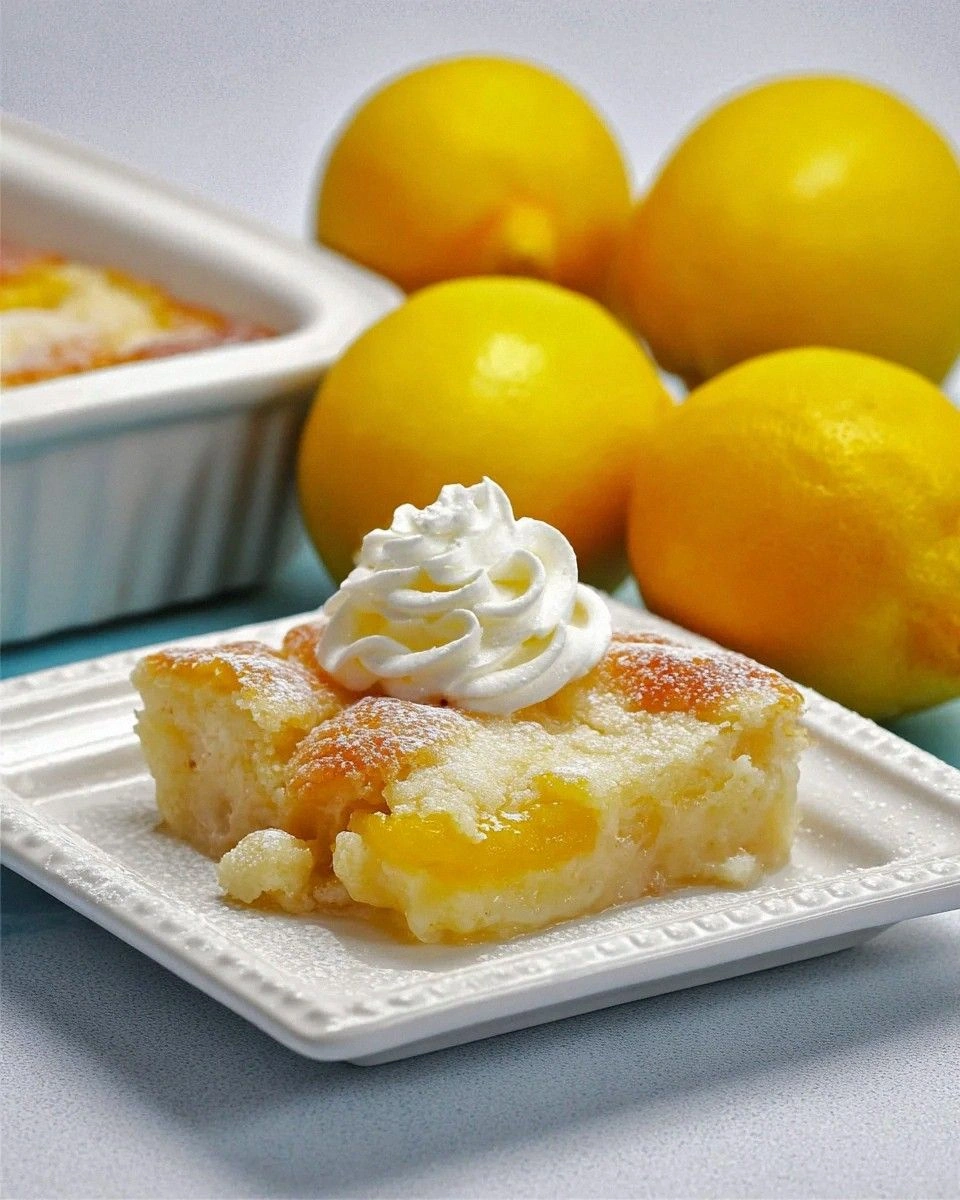
I stood in my kitchen at 11:47 p.m., clutching a limp, store-bought lemon bar that tasted like a scented candle had a bad day. The rain was drumming against the window, my favorite pajama pants had a hole in the knee, and I was supposed to bring dessert to brunch in nine hours. I could have cried, but instead I ransacked the pantry like a raccoon on a mission. Half an hour later the oven light glowed like a tiny sun, and the smell of bubbling lemon custard and buttery crust was curling through the house so aggressively that my neighbor texted, “Are you baking or did the candle factory explode?” That night I scribbled ratios on the back of an electric bill, swore a lot, and pulled out a pan of what I now call Magic Lemon Cobbler: a dessert that forms its own tangy-sweet layer of lemon curd under a feather-light blanket of cobbler that rises like it’s auditioning for a Broadway musical. I ate two servings standing up in sock feet, cold rain still pinging the gutters, and decided the world needed this recipe more than I needed sleep.
Fast-forward through three months of obsessive tweaking—twenty-seven pounds of lemons, a brief and emotional affair with bottled juice (never again), and one incident involving a smoke alarm and an overzealous broiler—until I arrived at the version I’m handing you today. This isn’t the polite, dainly sliced lemon bar you balance on a napkin at bridal showers. This is the rebellious cousin who shows up in sequined sneakers, insists on disco music, and somehow makes everyone laugh until they snort. The filling is silky, tart, and bright enough to make your taste buds stand at attention, while the topping bakes into golden hillocks with crispy edges that shatter like thin ice under your spoon. And here’s the kicker: you don’t need fancy gadgets, separate bowls for wet and dry, or a culinary degree—just one bowl, one whisk, and a willingness to trust the magic.
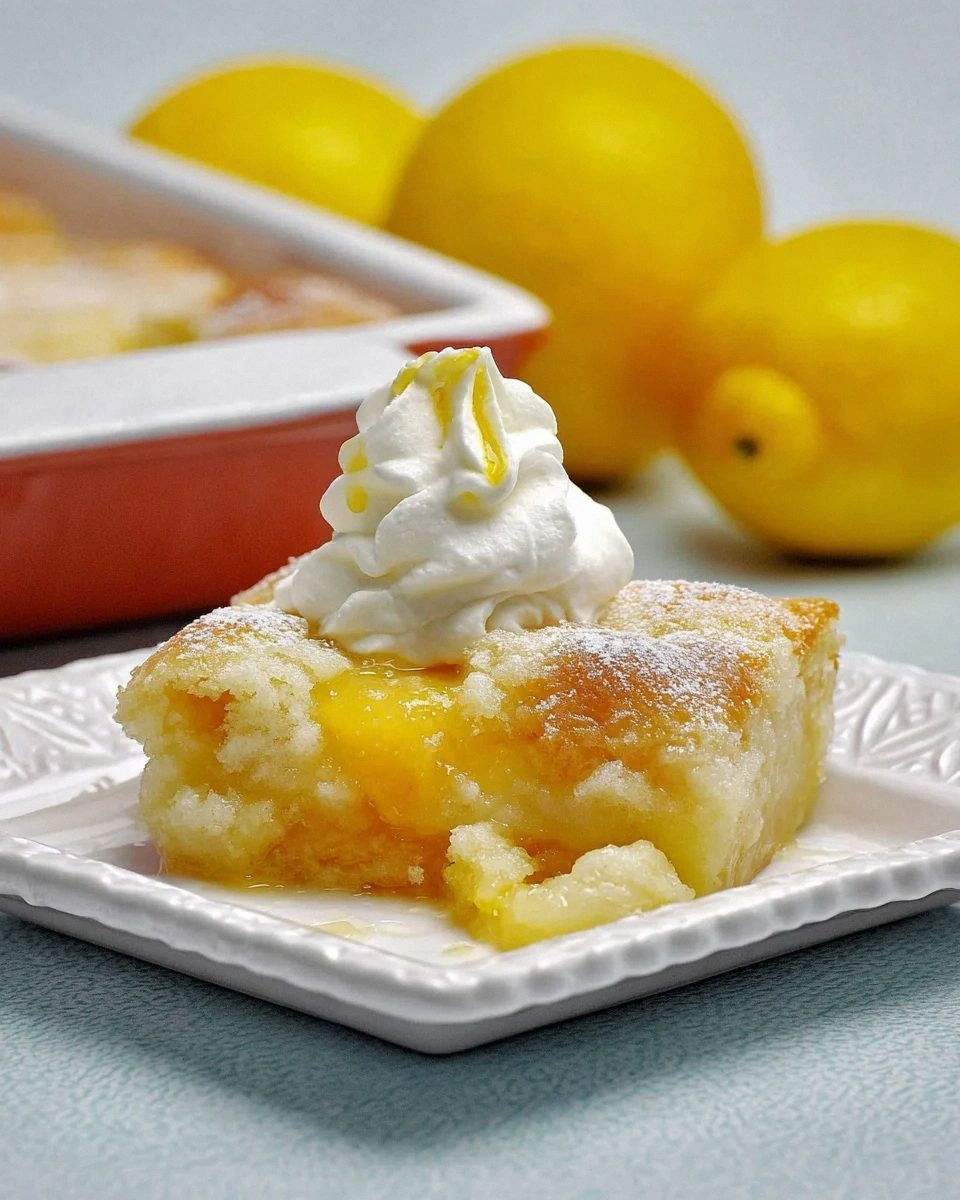
Picture yourself pulling this out of the oven, the whole kitchen smelling like a sun-kissed Amalfi coast afternoon, the surface quivering like it’s barely containing the lemon volcano underneath. Steam rises in lazy curlicues, carrying the aroma of vanilla, Meyer lemon zest, and the caramel note that happens when butter meets sugar at 350°F. Your people hover nearby, trying to act casual while secretly calculating whether politeness requires them to wait for a plate. You crack the sugary crust with a spoon, releasing a flood of glossy yellow lava that pools into the crevices of the cobbler like liquid sunshine. One bite and the room goes quiet except for the scrape of spoons and the involuntary “mmm” that nobody bothers to hide. I dare you to taste this and not go back for seconds; I double-dog dare you to leave even a smear in the pan.
Let me walk you through every single step—by the end, you’ll wonder how you ever made it any other way.
What Makes This Version Stand Out
- Soufflé-Style Rise: While most cobblers slump like tired pancakes, this batter separates during baking, creating a self-saucing lemon layer beneath a puffy, golden cloud that climbs the sides of the dish like it’s trying to escape.
- Two-Lemon Punch: I use both zest and juice from fresh lemons, plus a whisper of limoncello for floral depth. Bottled juice tastes like furniture polish next to this sunshine bomb—trust me, I’ve sinned so you don’t have to.
- One-Bowl Brilliance: No cutting butter into flour, no juggling multiple vessels like a circus act. You whisk everything in the same order the ingredients are listed, which means fewer dishes and more Netflix time.
- Texture Flip: The bottom stays saucy while the top turns into airy cobblestones with crisp, caramelized crowns. Most recipes get this completely wrong and end up gummy; here’s what actually works.
- Make-Ahead Magic: Mix the dry blend the night before, zest your lemons into a jar, and you can assemble in under six minutes when guests arrive early and you’re still in yoga pants.
- Vanilla Sneak Attack: A capful of good vanilla extract rounds the sharp edges of citrus, giving the custard a creamy, almost ice-cream vibe that makes people ask, “Wait, did you fold in white chocolate?” Nope, just chemistry doing the tango.
Inside the Ingredient List
The Flavor Base
Lemon zest is the aromatic spark plug of this dessert. I use a microplane and grate only the sunny yellow skin, stopping at the white pith which tastes like bitter aspirin. Those tiny flecks carry essential oils that bloom in the oven, perfuming the custard with floral, almost sherbet notes. Skip the zest and you’ve got plain tartness—like going to Paris and only visiting the airport.
Granulated sugar does more than sweeten; it controls the set of the custard by bonding with egg proteins and preventing them from tightening into rubber. I tested raw sugar once hoping for artisan cred—the topping emerged sandy and the custard wept like a disappointed aunt. Stick with the white stuff for structure, then shower the finished plate with powdered sugar for that snow-kissed glamour shot.
The Texture Crew
All-purpose flour gives the cobbler skeleton, but I swap two tablespoons for cornstarch, creating a more tender crumb that melts on your tongue rather than sitting there like a bread roll. Cornstarch interferes with gluten just enough to keep things delicate without turning cakey. If you only have cake flour, go ahead, but reduce the milk by two tablespoons because cake flour drinks liquid like a camel.
Whole milk is the quiet MVP. Anything leaner and the custard tastes watery; anything richer steals the lemon’s spotlight. I’ve tried buttermilk for tang, but it curdled into sad little ricotta beads—delicious in pancakes, heart-breaking here. Bring the milk to room temp so it marries smoothly with melted butter and doesn’t seize into weird clumps that look like cauliflower.
The Unexpected Star
Melted butter is the river that carries flavor. I brown it just until the milk solids turn hazelnut and the aroma smells like toffee house-hunting in heaven. Browned butter adds a whisper of caramel that anchors the bright lemon, like bass notes under a soaring soprano. If you’re in a hurry, plain melted butter still works, but you’ll miss the depth that makes tasters close their eyes and sigh without knowing why.
The Final Flourish
Egg yolks give the custard its satiny body. I add one whole egg for structure plus an extra yolk for opulence; think of it as the difference between a thrift-store sweater and cashmere. The proteins coagulate at 160°F, so pull the cobbler when the center still jiggles like Jell-O doing the worm; residual heat will finish the job while it rests.
A pinch of salt is the volume knob. Without it, the lemon tastes flat, the sugar screams, and the buttery notes hide behind the curtains. I use kosher because the larger crystals distribute evenly; if you only have table salt, cut the quantity in half or your guests will make that polite “interesting” face.
Everything’s prepped? Good. Let’s get into the real action...
The Method — Step by Step
- Heat your oven to 350°F (175°C) and position the rack in the center. A hot, steady environment is crucial for the custard to set and the topping to rise evenly; a shy oven produces a sad, pudding-like swamp. While it heats, plop 6 Tbsp butter into a light-colored saucepan so you can watch the browning ballet. Slide the pan over medium heat, swirl occasionally, and when the foam subsides and the milk solids turn chestnut brown—about four minutes—pull it off immediately and pour into a bowl to stop carryover cooking. That nutty aroma? Absolute perfection.
- Butter a two-quart shallow baking dish, then dust it with a spoonful of sugar; the sugar caramelizes against the edges, creating a delicate crust that tastes like crème-brûlée trim. I use an 8×11-inch oval because the wide surface means more of those coveted crispy ridges, but a 9-inch square works if that’s what you’ve got. Place the dish on a rimmed baking sheet now; you’ll thank me later when any molten lemon lava bubbles over instead of welding itself to your oven floor.
- In a large bowl, whisk ¾ cup sugar with 2 Tbsp lemon zest until the sugar is damp and fragrant like a lemon orchard after rain. This step coats the zest particles in sugar, preserving their oils and preventing them from floating to the top in ugly speckled rafts. Add 3 large egg yolks, 1 whole egg, and 1 tsp vanilla, then whisk until the mixture turns pale and thick enough to ribbon off the whisk—about a minute of vigorous arm day. You’re looking for a sunny, homogenous emulsion that smells like summer camp and possibility.
- Pour in ½ cup fresh lemon juice, 1 Tbsp limoncello (optional but life-changing), and the browned butter, whisking constantly so the butter doesn’t scramble the yolks. The batter will look glossy and smell like a lemon tart wearing a caramel coat. Tap the bowl on the counter to pop any bubbles; trapped air can tunnel through the custard, leaving weird moon craters. Let this mixture rest while you whip up the topping—this pause hydrates the sugar and mellows the acid so the finished flavor is smooth, not shrill.
- In the same bowl (yes, one-bowl glory), add 1 cup flour, 2 Tbsp cornstarch, 2 tsp baking powder, ¼ tsp salt, and ⅓ cup more sugar. Whisk dry first to aerate, then pour in ¾ cup room-temp whole milk in a slow spiral, whisking just until you see the tracks of the tines—lumps are fine, over-mixing leads to gluten gym rats doing bicep curls in your batter.
- Scrape the thick batter into the sugared dish and smooth the top with a spatula that you’ve spritzed with cooking spray; the batter is sticky and will cling like toddler fingers otherwise. Now here’s the magic moment: slowly ladle the lemon custard over the back of a spoon so it floats on top. During baking the layers invert—custard sinks, cobbler rises—like a dessert magic trick that would make David Copperfield jealous. Don’t stir, don’t jiggle, just trust the science.
- Slide the pan into the oven and bake 28–32 minutes, rotating halfway for even color. You’re waiting for the top to puff into golden hills, the edges to pull slightly from the sides, and the center to jiggle like a belly laugh. The surface should be freckled with darker craters where the sugar has caramelized; those spots taste like lemon-brûlée brittle. If the top browns too quickly, tent loosely with foil for the final five minutes—nobody wants a tan-line cobbler.
- Cool on a rack for exactly 10 minutes; any longer and the steam escapes, leaving the cobbler dry. During this rest the custard finishes setting and the flavors meld from individual notes into a citrus symphony. Dust with powdered sugar through a fine sieve for that fresh snow aesthetic, then serve warm with a pitcher of cold heavy cream or a scoop of vanilla bean ice cream that melts into the hot valleys like alpine snowmelt. That first scoop, when the spoon breaks through the crisp shell and the lemon lava rushes out, is the moment you’ll replay in your head at boring meetings.
That’s it—you did it. But hold on, I’ve got a few more tricks that’ll take this to another level...
Insider Tricks for Flawless Results
The Temperature Rule Nobody Follows
Room-temperature ingredients mix more easily and bake more evenly, but here’s the kicker: if your kitchen is chilly, nestle the eggs in a bowl of warm tap water for five minutes and microwave the milk until barely lukewarm, not hot. Cold batter shocks the butter into speckles, and you’ll end up with a greasy mosaic instead of a smooth custard. A friend tried skipping this once; her cobbler looked like it had chicken pox and tasted like fried lemon chalk. Don’t be that friend.
Why Your Nose Knows Best
When browning butter, rely on aroma more than color. The moment it smells like toasted hazelnuts and the foaming quiets, yank it off heat—carryover browning will finish the job while it cools. Waiting until it looks textbook mahogany means it will taste bitter by the time you pour it out. I ruined three batches before I learned to trust my nostrils over my eyeballs; now I keep a nose-sized Post-it on the range that reads “Smell first, look second.”
The 5-Minute Rest That Changes Everything
I know you want to dive in while it’s volcano-hot, but resting exactly five minutes lets the starch granules finish absorbing liquid so the custard sets into a silken sauce rather than running like a broken custard. Cover loosely with foil to retain heat without trapping steam that would sog the top. Use this window to set out spoons, pour the wine, and brag about how the layers magically flip—by the time you serve, the texture is pudding-smooth and the topping stays crisp, a combo that will make you look like a culinary wizard.
Creative Twists and Variations
This recipe is a playground. Here are some of my favorite ways to switch things up:
Ruby Grapefruit Cobbler
Swap half the lemon juice for fresh ruby grapefruit juice and add a splash of Campari for bitter complexity. The result is a blushing coral dessert that tastes like a sunset over Capri. Garnish with candied peel and serve with prosecco for a brunch that feels like vacation.
Coconut Lime Escape
Replace the milk with full-fat coconut milk and sub lime zest/juice for lemon. Add ¼ cup toasted coconut on top for the final five minutes of baking. You’ll end up with a tropical version that smells like a beach bar and makes winter feel optional.
Berry Burst Cobbler
Scatter a cup of raspberries or blueberries over the batter before ladling the citrus layer; the berries burst into jammy pockets that contrast with the tangy custard. Frozen berries work—don’t thaw or they’ll bleed tie-dye streaks through the topping.
Earl Grey Infusion
Steep two Earl Grey tea bags in the hot browned butter for ten minutes, then squeeze and proceed. The bergamot echoes the citrus and adds a whisper of floral sophistication that turns afternoon tea into a Jane Austen moment.
Ginger Beer Zing
Replace the limoncello with 2 Tbsp spicy ginger beer and fold ½ tsp grated fresh ginger into the batter. The heat sneaks up gently, like a hug that ends with a tickle fight—perfect for people who think dessert should have a personality.
Storing and Bringing It Back to Life
Fridge Storage
Cover the cooled baking dish tightly with plastic wrap—press it directly onto the surface to prevent the custard from forming a rubber skin—and refrigerate up to four days. The topping will soften, but a quick blast under the broiler for ninety seconds resurrects the crunch. If you’re storing individual portions, use glass jars with tight lids; they reheat evenly and look adorable for midnight sneaks.
Freezer Friendly
Cut into squares, wrap each in plastic then foil, and freeze for up to two months. Thaw overnight in the fridge, then warm in a 300°F oven for ten minutes. The texture won’t be quite as lofty, but the flavors remain a citrus love letter. Pro tip: freeze the squares on a tray first so they hold shape before wrapping, preventing tragic squashed casualties.
Best Reheating Method
Microwaves murder the topping, turning it into rubber mats, so use an oven or toaster oven at 300°F. Add a tiny splash of water to the dish, cover with foil, and heat eight minutes; the gentle steam revives the custard without drying the edges. Serve with a fresh dusting of sugar and a dollop of whipped cream to disguise any lost glamour.