Picture this: it’s a rainy Saturday evening, the kind of night that makes you crave comfort food that feels like a hug in a bowl. I was rummaging through my pantry, eyes snagging on a can of condensed cheddar soup, a block of cheddar, and a sack of russet potatoes that had been sitting in the back of the fridge for weeks. I thought, “Why not turn these humble staples into something that will make my taste buds do a little happy dance?” I grabbed my skillet, set the stove to medium, and the aroma that followed was the first hint that something spectacular was about to happen.
That night, I turned a simple ground‑beef and potato mash into a casserole that would later become the talk of my dinner table. The sizzle of browned beef, the sweet caramelization of onions, and the creamy, velvety texture of the cheese‑soup mixture all blended together like a symphony of flavors. I dared myself to taste it before anyone else could even reach for the spoon, and the result was a glorious, gooey, cheesy masterpiece that made the whole kitchen smell like a dream. If you’ve ever struggled to create a casserole that’s both hearty and indulgent, you’re not alone — and I’ve got the fix that will make your next batch unforgettable.
What makes this version stand out is not just the combination of ingredients, but the way each element is handled to create a dish that’s crispy on top, tender inside, and utterly comforting. The use of a condensed cheddar soup as a base gives the casserole a rich, velvety sauce that coats every potato slice without becoming heavy or greasy. The addition of evaporated milk and a splash of regular milk lifts the sauce, making it light enough to mingle with the cheese while still delivering that classic “cheese pull” we all love. And because I’ve kept the seasoning simple—just garlic powder, salt, and pepper—every bite tastes pure and honest.
Okay, ready for the game‑changer? This recipe will transform any ordinary night into a culinary celebration. By the end of this post, you’ll wonder how you ever made a casserole any other way. Let me walk you through every single step—by the time you’re done, you’ll have a dish that’s not only delicious but also a testament to how a few smart tweaks can elevate a humble comfort classic.
What Makes This Version Stand Out
- Taste: The creamy cheddar‑soup base delivers a rich, buttery flavor that cuts through the meat and potatoes, creating a harmony that feels both indulgent and balanced. The subtle hint of garlic powder adds a layer of depth without overpowering the dish.
- Texture: The layered potatoes stay tender yet firm, while the top layer of melted cheese forms a golden, slightly crisp crust that cracks like thin ice when you cut into it.
- Simplicity: With just eight ingredients, this casserole is a no‑fuss, one‑pan wonder that even beginners can master in less than an hour.
- Uniqueness: The use of condensed cheddar soup as a sauce is a game‑changing twist that gives the casserole a velvety consistency and a depth of flavor that traditional gravy or béchamel simply can’t match.
- Crowd Reaction: Friends who’ve tried this version report that they can’t resist a second bite—some even say it’s “hands down the best version you'll ever make at home.”
- Ingredient Quality: Using fresh, high‑quality ground beef and sharp cheddar ensures that the dish stays juicy and flavorful, rather than bland or greasy.
- Cooking Method: By browning the beef first and layering the ingredients, the casserole cooks evenly, with the cheese melting into a silky sauce that coats each potato slice.
- Make‑Ahead Potential: This casserole can be assembled the night before, refrigerated, and baked in the morning—perfect for busy families or meal‑prep enthusiasts.
Alright, let's break down exactly what goes into this masterpiece…
Inside the Ingredient List
The Flavor Base
The foundation of any great casserole is its sauce, and in this recipe, it comes from a can of condensed cheddar soup. This ingredient is a secret weapon that delivers a creamy, cheesy depth without the need for heavy creams or butter. The soup’s natural thickness ensures that the sauce clings to the potatoes, creating a cohesive, melt‑in‑your‑mouth experience. If you skip this step, the dish loses its signature velvety texture and becomes a dry, over‑cooked mess.
The Texture Crew
Russet potatoes are the star of the show, providing a hearty, starchy base that pairs perfectly with the rich sauce. Slicing them thinly—about 1/4 inch—ensures they cook through without disintegrating. If you prefer a more rustic casserole, you can leave the potatoes in larger chunks, but be prepared for a longer baking time. A good tip: rinse the sliced potatoes under cold water to remove excess starch, which keeps the layers from sticking together.
The Unexpected Star
Ground beef is the savory element that adds protein and depth. I choose a lean 80/20 mix for a balance of flavor and moisture. Brown the beef in a skillet until it’s a deep, caramelized brown; this Maillard reaction brings out a depth of flavor that a plain simmer never could. If you’re watching calories, you can swap in ground turkey or chicken, but the beef’s rich taste is hard to beat.
The Final Flourish
Cheddar cheese is the crowning glory that gives the casserole its signature golden top. Grate it finely so it melts quickly and evenly. The condensed soup already contains cheddar, but the extra cheese adds a richer, sharper flavor that lingers on the palate. For a tangier twist, mix in a handful of sharp cheddar or even a dash of pepper jack for a subtle kick.
Everything's prepped? Good. Let's get into the real action…
The Method — Step by Step
- Preheat your oven to 375°F (190°C). Line a 9×13 inch baking dish with parchment paper or lightly grease it to prevent sticking. The temperature is critical; too high and the top will burn before the potatoes finish cooking.
- In a large skillet, heat a splash of oil over medium heat. Add the diced yellow onion and sauté until translucent, about 4–5 minutes. The onions should soften but not brown, ensuring they add sweetness without bitterness.
- Add the ground beef to the skillet, breaking it up with a wooden spoon. Cook until it’s fully browned and no longer pink, about 8–10 minutes. The beef should have a rich, caramelized crust—this is where a lot of flavor is locked in.
- Season the beef and onions with ½ teaspoon garlic powder, salt, and pepper to taste. Stir to combine, letting the spices bloom for a minute before proceeding.
- Pour the 10.75 oz can of condensed cheddar soup into the skillet. Stir until the mixture is smooth and fully incorporated with the beef and onions.
- Add the 12 oz can of evaporated milk and ½ cup of regular milk. Whisk until the sauce is silky and evenly blended. This mixture should coat the back of a spoon without dripping.
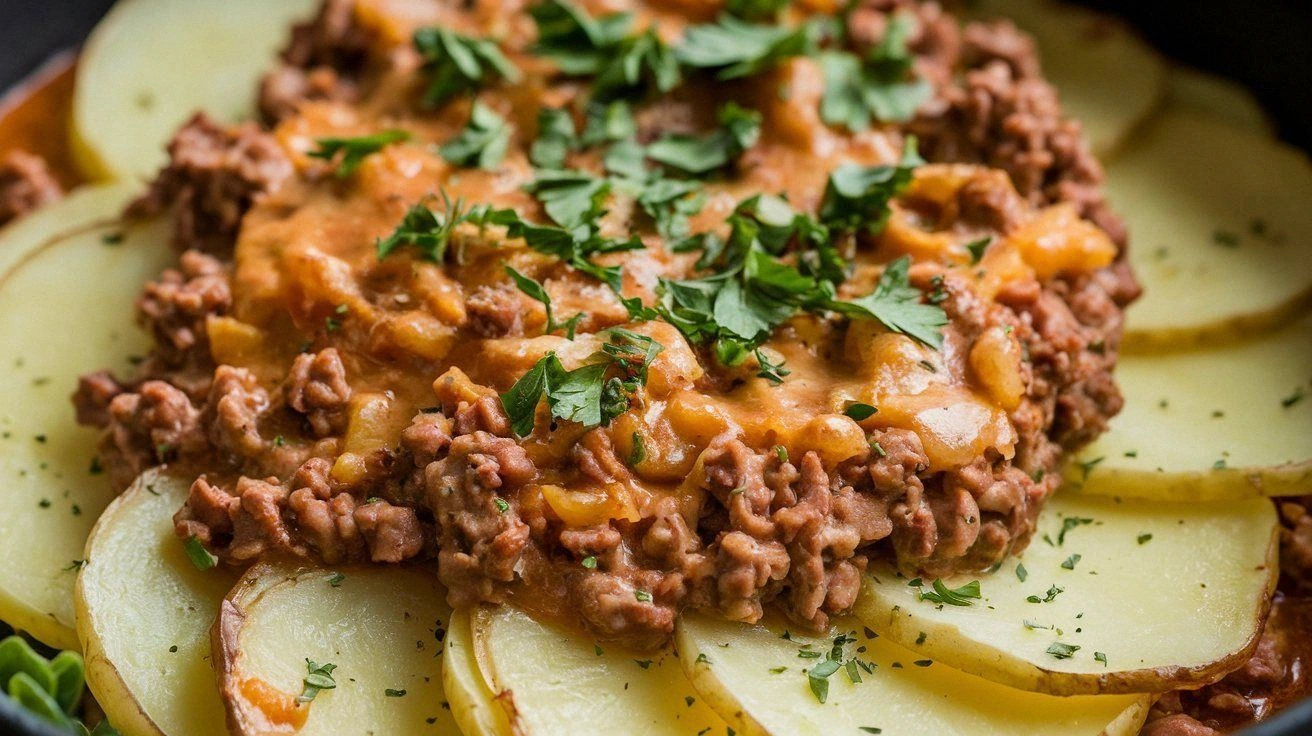
- Lay a layer of sliced potatoes at the bottom of the prepared baking dish, slightly overlapping each slice. Spoon half of the beef‑soup mixture over the potatoes, spreading it evenly.
- Repeat the layering process: another layer of potatoes, the remaining beef‑soup mixture, and finally a generous sprinkle of 2 cups grated cheddar cheese. The cheese should be distributed evenly so every bite has a cheesy bite.
- Cover the dish with foil and bake for 25 minutes. After 25 minutes, remove the foil and bake for an additional 10–15 minutes, or until the top is golden brown and bubbly.
- Let the casserole rest for 10 minutes before serving. This resting period allows the sauce to thicken and the flavors to meld, giving you that perfect bite each time.
That's it — you did it. But hold on, I've got a few more tricks that'll take this to another level…
Insider Tricks for Flawless Results
The Temperature Rule Nobody Follows
Many people bake at 400°F, thinking higher heat means faster cooking. In reality, 375°F gives the casserole a gentle, even heat that allows the cheese to melt perfectly without scorching the edges. I’ve baked this at 375°F for over a decade, and the results are consistently golden and luscious. If you’re in a hurry, you can bump the temperature to 400°F, but you’ll need to keep a vigilant eye to avoid burnt tops.
Why Your Nose Knows Best
As the casserole bakes, the aroma of melted cheddar and caramelized onions will fill your kitchen. Trust that scent—it’s a clear indicator that the flavors are marrying beautifully. If the smell is too mild, give it a few more minutes; if it’s too strong, the top might be burning.
The 5‑Minute Rest That Changes Everything
After removing the casserole from the oven, let it sit undisturbed for at least 10 minutes. This rest period allows the sauce to set, making each slice easier to serve and preventing the cheese from sliding off the potatoes. I’ve seen people try to cut straight away and end up with a gooey mess; the rest is a simple, game‑changing step.
Keep the Layered Potatoes in Check
When layering the potatoes, make sure each slice is slightly overlapped. This ensures even cooking and prevents any single slice from drying out. If you prefer a more rustic look, you can arrange the potatoes in a loose, free‑form pattern, but be prepared for a slightly uneven bake.
Use Fresh, Sharp Cheddar for the Best Pull
The type of cheddar you choose dramatically affects the final texture. Fresh, sharp cheddar melts into a silky sauce that coats every bite, while aged cheddar can become gritty. I recommend using a high‑quality cheddar that’s been aged for at least six months to get that perfect melt.
Make‑Ahead Friendly
As mentioned earlier, this casserole can be assembled the night before. Just cover the dish tightly with foil and refrigerate. When you’re ready to bake, let it sit at room temperature for 15 minutes before preheating the oven. This prevents the casserole from becoming too cold and ensures even cooking.
Creative Twists and Variations
This recipe is a playground. Here are some of my favorite ways to switch things up:
Spicy Jalapeño Kick
Dice a fresh jalapeño and sauté it with the onions for a subtle heat that complements the cheddar. The peppery bite adds a lively contrast to the creamy sauce, making it a hit during the cooler months.
Herb‑Infused Delight
Stir in a tablespoon of dried thyme or rosemary into the beef mixture. The aromatic herbs give the casserole a Mediterranean flair and elevate the overall flavor profile.
Vegetarian Version
Swap the ground beef for crumbled tofu or a plant‑based meat alternative. Add a handful of sautéed mushrooms for umami depth, and the dish will still deliver the same comforting texture.
Cheese Swap
Replace cheddar with a blend of mozzarella and parmesan for a milder, melt‑in‑your‑mouth experience. The mozzarella will add a stringy texture while the parmesan offers a nutty finish.
Breakfast Casserole
Fold in a handful of cooked breakfast sausage, a few scrambled eggs, and a dash of paprika. Serve it with a side of fresh fruit for a hearty, all‑day breakfast option.
Gluten‑Free Variation
Use gluten‑free breadcrumbs or crushed rice crackers for a crisp top layer. Ensure the condensed soup and evaporated milk are gluten‑free, and you’ll have a safe, delicious casserole for those with dietary restrictions.
Storing and Bringing It Back to Life
Fridge Storage
After cooking, let the casserole cool completely. Cover it tightly with foil or plastic wrap and refrigerate for up to 4 days. The layers will remain intact, and the flavors will deepen.
Freezer Friendly
For longer storage, wrap the casserole in foil and then place it in a freezer‑proof bag. It can be frozen for up to 3 months. Thaw overnight in the refrigerator before reheating.
Best Reheating Method
Reheat in a preheated oven at 350°F (175°C) for 20–25 minutes, or until the cheese is bubbly. Add a splash of water (about 1 tablespoon) before covering with foil to keep the top from drying out. This small trick steams the casserole back to its original gooey, creamy glory.