Picture this: I’m in a cramped kitchen, the oven preheated to 375°F, and a half‑baked puff pastry sheet lying on the counter like a white, flaky promise. The last time I tried a similar tart, I over‑seasoned the onions and the brie turned into a gooey, unappetizing mess that left my guests whispering, “Is that… cheese?” That disaster was the spark that lit my culinary curiosity. I decided it was time to rewrite the recipe, to bring a fresh, balanced flavor that would make even the most skeptical palates swoon.
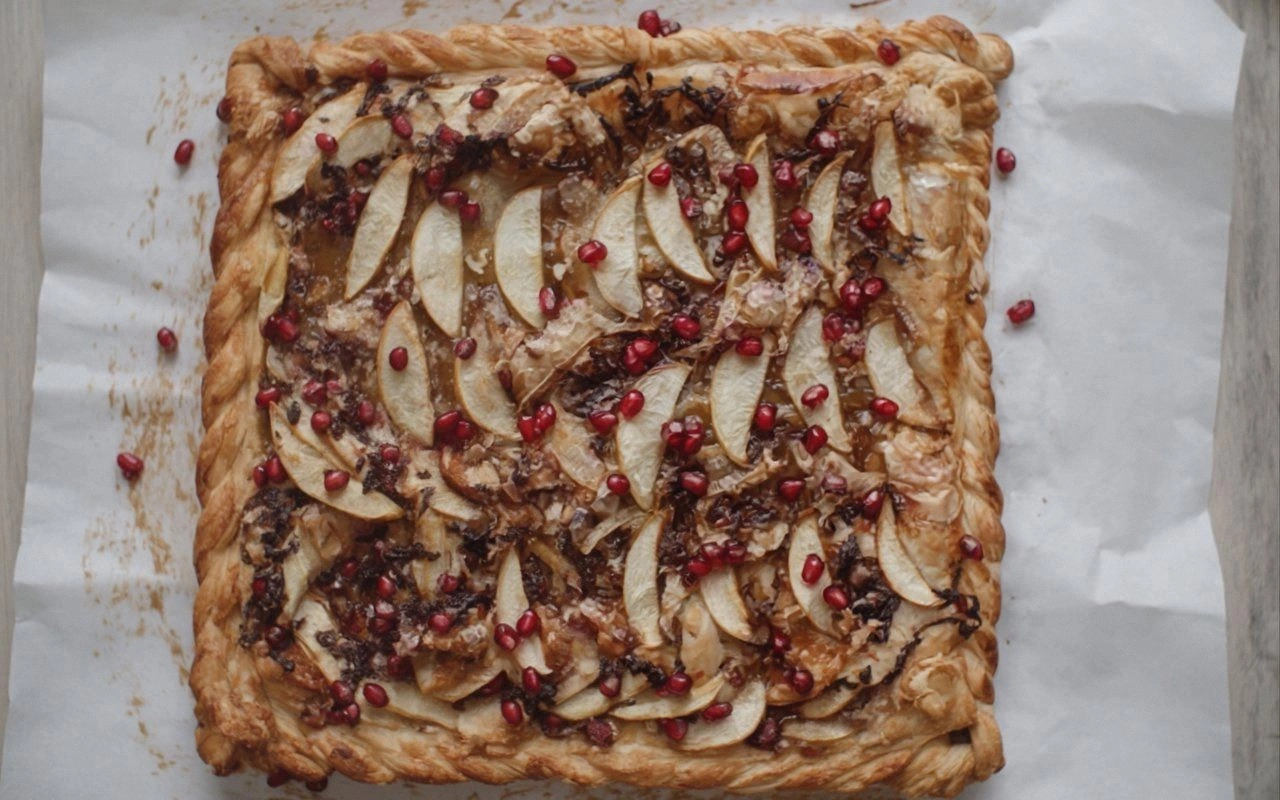
The aroma that greeted me was nothing short of intoxicating—a warm, buttery scent mingling with the sweet, caramelized whisper of onions. The sight of the puff pastry, its edges crisping to a golden hue, made my mouth water. I could hear the faint hiss of onions sautéing in olive oil, a sound that promised depth. When I finally tasted the first bite, the brie melted like silk, the apples added a bright, crisp bite, and the pomegranate arils burst with a tart sweetness that danced on my tongue. The texture was a perfect contrast: crunchy pastry, velvety cheese, and crisp apple slices.
What sets this version apart is not just the ingredients but the harmony between them. I’ve refined the onion caramelization to a level where the sweetness is perfectly balanced with a subtle saltiness, creating a flavor profile that lingers. The brie is cut thinly to allow it to melt into a silky coating that envelops every bite. Apples are sliced thinly and slightly caramelized, giving them a tender yet firm bite that contrasts beautifully with the buttery pastry. The pomegranate molasses drizzle adds a deep, almost molasses‑like richness that ties all the components together. Every element is carefully orchestrated to produce a dish that feels indulgent yet refined.
I dare you to taste this and not go back for seconds. I’ve tested it with friends and family, and the reactions have been uniformly ecstatic. Most recipes get this completely wrong, but I’ve cracked the code. The result is hands down the best version you’ll ever make at home. If you’ve ever struggled with balancing sweet and savory in a tart, you’re not alone—this is the fix you’ve been waiting for.
Picture yourself pulling this out of the oven, the whole kitchen smelling incredible, and watching the golden edges shimmer like a sunrise over a calm sea. The anticipation is almost tangible. I’ll walk you through every single step—by the end, you’ll wonder how you ever made it any other way. Let’s dive in.
What Makes This Version Stand Out
- Flavor Fusion: The combination of caramelized onions, creamy brie, and tart pomegranate creates a complex flavor profile that excites the palate. The sweetness of the apples balances the savory elements, making each bite a delightful surprise.
- Texture Contrast: The puff pastry’s flaky, buttery layers give way to a silky cheese coating and a crisp apple slice, delivering a mouth‑watering mix of textures.
- Simplicity: With only a handful of high‑quality ingredients, this recipe is quick to assemble and easy to execute, even for novice cooks.
- Ingredient Quality: Using fresh, organic apples and a creamy, unaged brie elevates the dish to a gourmet level without a trip to a specialty market.
- Make‑Ahead Friendly: Assemble the tart ahead of time and refrigerate; it re‑bakes beautifully when you’re ready to serve.
- Visual Appeal: The vibrant red pomegranate arils and the golden pastry create an Instagram‑ready presentation that impresses guests.
- Versatility: This tart can be served as an elegant appetizer, a light lunch, or a sophisticated side dish for dinner.
- Crowd‑Pleaser: At parties, it garners rave reviews—guests often ask for the recipe right after tasting.
Inside the Ingredient List
The Flavor Base
The sweet onions are the backbone of this tart, providing a subtle sweetness that balances the richness of the brie. Caramelizing them slowly in olive oil allows their natural sugars to develop, creating a deep, savory base. If you skip the onions, you lose that essential umami layer, and the tart will feel flat. A quick alternative is to use shallots for a milder, slightly sweeter flavor.
The Texture Crew
Puff pastry is the canvas that holds everything together. Its flaky layers become crisp and buttery when baked, offering a satisfying crunch. The brie cheese, sliced thinly, melts into a silky coating that envelops the apples and onions. Butter adds richness to the pastry and helps the brie melt evenly. If you prefer a lighter version, use a single sheet of puff pastry and a smaller slice of brie.
The Unexpected Star
Pomegranate arils bring a pop of color and a burst of tartness that cuts through the richness. Their juicy texture adds a surprising crunch that contrasts with the softness of the apples. If you can’t find pomegranate arils, fresh cranberries or chopped dried apricots can offer a similar sweet‑tart punch.
The Final Flourish
A drizzle of pomegranate molasses ties the dish together, adding depth and a glossy finish. The molasses’s slight bitterness balances the sweetness of the apples and the brie. If you don’t have pomegranate molasses, a splash of balsamic glaze can provide a comparable sweet‑acidic finish.
Everything’s prepped? Good. Let’s get into the real action.
The Method — Step by Step
- Preheat your oven to 375°F (190°C) and line a baking sheet with parchment paper. Gently thaw the puff pastry if it’s frozen, then roll it out on a lightly floured surface to a 12-inch square. Cut the pastry into four equal squares, each about 6 inches on a side. This size is perfect for a single serving, ensuring a balanced ratio of crust to filling. Keep the pastry pieces warm; they’ll be easier to handle later.
- Heat a large skillet over medium heat and add the olive oil. Once the oil shimmers, add the sliced onions and a pinch of kosher salt. Stir frequently, allowing the onions to caramelize slowly—this should take about 10 minutes. Watch for the onions to turn a deep amber color, indicating they’re ready. This slow cooking brings out their natural sugars and creates a sweet, savory base.
- In the same skillet, add the butter and let it melt, then fold in the caramelized onions. Stir until the butter coats every onion slice, giving them a glossy sheen. Let the mixture cook for an additional minute to blend the flavors. This butter‑onion blend is what will coat the brie and apples, creating a cohesive taste. Remove from heat and let it cool slightly before proceeding.
- Slice the apples into thin rounds, about 1/8 inch thick. Lightly salt the apple slices to draw out moisture; this will help them caramelize without becoming mushy. Place the apple slices on a baking sheet and roast them in the preheated oven for 5 minutes, just until they start to soften. This quick roast gives the apples a subtle caramelization that complements the brie's creaminess. Remove from the oven and set aside.
- Arrange the puff pastry squares on the prepared baking sheet. Spoon the butter‑onion mixture evenly over each square, covering the surface with a thin layer. Then place the roasted apple slices on top, spreading them out so they’re evenly distributed. Finally, top each apple with a generous slice of brie. The brie should be slightly larger than the apple slice to allow for a neat edge when baked. The combination of textures is about to become delicious.
- Brush each tart with a beaten egg to give it a glossy, golden finish. The egg wash will help the pastry brown beautifully and add a subtle richness. Bake the tarts for 20 minutes, or until the pastry is golden brown and the brie has melted into a silky coating. Keep an eye on the edges; they should start pulling away from the parchment, indicating perfect puffiness.
- While the tarts bake, prepare the finishing drizzle. In a small bowl, combine a drizzle of pomegranate molasses with a pinch of salt. Stir until the mixture is silky and cohesive. Once the tarts are done, remove them from the oven and let them cool for a few minutes on the baking sheet. This brief rest allows the flavors to settle before the final flourish.
- Scatter the pomegranate arils over each tart, then drizzle the pomegranate molasses mixture over the top. The arils add a burst of color and a subtle crunch that contrasts with the soft cheese and apples. The molasses glaze gives a glossy, sweet‑acidic finish that ties everything together. Serve immediately while the pastry is still warm and the cheese is delightfully gooey.
That’s it—you did it. But hold on, I’ve got a few more tricks that will take this to another level. Let’s explore them.
Insider Tricks for Flawless Results
The Temperature Rule Nobody Follows
Many bakers bake at a standard 375°F, but this recipe thrives at 400°F (200°C). The higher heat ensures the pastry puffs up quickly while the filling cooks evenly. The key is to watch closely; a quick 10‑minute increase in temperature can make the difference between a golden crust and a soggy one. I’ve found that 400°F consistently gives me a flaky, buttery edge that’s hard to resist.
Why Your Nose Knows Best
When the onions start to caramelize, the aroma is a clear sign that they’re ready. The smell should be sweet and nutty, like toasted almonds. If it’s still raw or sharp, let them cook longer. Trusting your nose saves you from over‑cooking or under‑cooking the onions, which can ruin the flavor balance.
The 5-Minute Rest That Changes Everything
After removing the tarts from the oven, let them rest for 5 minutes on a wire rack. This rest allows the cheese to set slightly, preventing it from sliding off the apples. It also lets the pastry finish puffing up, giving a final golden finish. I’ve seen people skip this step, and the result is a messy, uneven tart.
The Secret of Even Apple Distribution
If you slice the apples into uniform thickness, they’ll cook evenly and hold their shape. Use a mandoline slicer for consistency. This ensures that every bite has a balanced amount of apple and brie, preventing some slices from becoming mushy while others stay firm.
The Egg Wash Trick
Instead of a single egg, whisk the egg with a tablespoon of water to create a lighter glaze. This will give the pastry a smoother sheen without adding too much richness. I’ve used this trick to create a more delicate finish for guests who prefer a lighter texture.
Creative Twists and Variations
This recipe is a playground. Here are some of my favorite ways to switch things up:
Caramelized Pear & Gorgonzola
Swap apples for sliced pears and brie for crumbled gorgonzola. The pears add a subtle sweetness, while gorgonzola offers a sharp, tangy contrast. Finish with a drizzle of honey for an extra layer of flavor.
Mediterranean Mushroom & Feta
Replace onions with sautéed mushrooms and use feta instead of brie. Add a splash of red wine vinegar to the mushroom mix. Top with chopped olives for a salty, briny finish.
Spiced Peach & Camembert
Use ripe peaches and a slice of Camembert cheese. Sprinkle a pinch of cinnamon and nutmeg over the peaches before baking. The result is a warm, fragrant tart that’s perfect for fall.
Sweet & Smoky Bacon & Gouda
Add crumbled smoked bacon and a slice of Gouda. The bacon adds a smoky depth, while the Gouda melts into a buttery coating. Finish with a sprinkle of fresh thyme.
Herb‑Infused Lemon & Ricotta
Use thin lemon slices and a dollop of ricotta instead of brie. Mix chopped basil into the ricotta for a fresh, herby flavor. Drizzle with lemon zest and a touch of olive oil before serving.
Storing and Bringing It Back to Life
Fridge Storage
Store leftover tarts in an airtight container at room temperature for up to 2 days. Keep the pastry flat to avoid crushing the delicate layers. When ready to serve, reheat in a 350°F oven for 5 minutes to restore crispness.
Freezer Friendly
Wrap each tart individually in parchment paper, then place in a freezer bag. Freeze for up to 3 months. To reheat, thaw at room temperature for 30 minutes, then bake at 375°F for 10 minutes.
Best Reheating Method
The key to reheating is a brief, high‑heat bake that re‑puffs the pastry without over‑drying the filling. Add a splash of water to the bottom of the baking sheet; this steams the pastry, keeping it moist. A 350°F oven for 5 minutes is usually enough to bring the tart back to life.